
For the company’s compact models, the 1.3-liter Toyota 2SZ-FE engine was manufactured in China and Indonesia between 1999 and 2016. The unit’s gas distribution mechanism was powered by a Morse chain, and the motor only had a VVT-i phase regulator at the inlet.
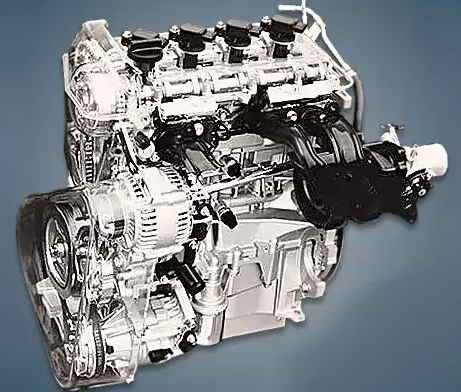
The engines 1SZ-FE and 3SZ-VE are also part of the SZ family.
The engine was mounted on:
- Toyota Belta XP90 in 2005 – 2016;
- Toyota Ractis NCP100 in 2005 – 2010;
- Toyota Yaris XP10 in 1999 – 2005; Yaris XP90 in 2005 – 2011;
- Daihatsu YRV in 2000 – 2005.
Specifications
| Production years | 1999-2016 |
| Displacement, cc | 1297 |
| Fuel system | MPI |
| Power output, hp | 82 – 88 |
| Torque output, Nm | 115 – 125 |
| Cylinder block | cast iron R4 |
| Block head | aluminum 16v |
| Cylinder bore, mm | 72 |
| Piston stroke, mm | 79.6 |
| Compression ratio | 11.0 |
| Features | no |
| Hydraulic lifters | no |
| Timing drive | Morse chain |
| Phase regulator | VVT-i intake |
| Turbocharging | no |
| Recommended engine oil | 5W-30 |
| Engine oil capacity, liter | 3.4 |
| Fuel type | petrol |
| Euro standards | EURO 3/4 |
| Fuel consumption, L/100 km (for Toyota Yaris 2004) — city — highway — combined |
7.7 5.1 6.1 |
| Engine lifespan, km | ~250 000 |
| Weight, kg | 93 |
Disadvantages of the 2SZ-FE engine
Using premium oil can help prevent a lot of motor issues.
The chain occasionally jumps and the valve bends against the pistons as a result of the hydraulic tensioner’s wear;
In extreme frost, the intake tract leaks air, and in hot weather, the opposite occurs.
Because of the pump’s design, lubrication takes a while to circulate throughout the system after the engine is started;
The attachment drive belt is very costly, but it wears out quickly.