
In 2017, the new Lexus LS500 and the 3.5-liter Toyota V35A-FTS engine were unveiled. This power unit produces more than 400 horsepower and 600 Nm and has twin turbocharging. All of the V-shaped 8-cylinder engines found under the hood of many of the company’s models will soon be replaced by these motors.
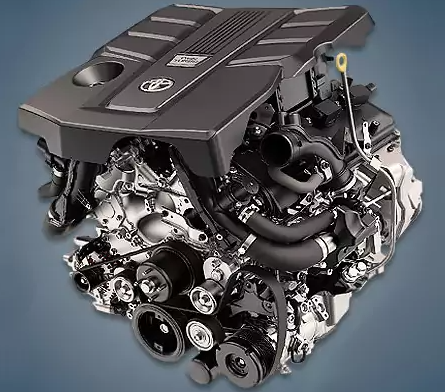
The engine was installed on:
- Toyota Land Cruiser 300 (J300) since 2021;
- Toyota Sequoia 3 (XK80) since 2022;
- Toyota Tundra 3 (XK70) since 2021;
- Lexus LS500 5 (XF50) since 2017;
- Lexus LX600 4 (J310) since 2021.
Specifications
| Production years | since 2017 |
| Displacement, cc | 3444 |
| Fuel system | direct injection D-4ST |
| Power output, hp | 350 – 420 |
| Torque output, Nm | 550 – 650 |
| Cylinder block | aluminum V6 |
| Block head | aluminum 24v |
| Cylinder bore, mm | 85.5 |
| Piston stroke, mm | 100 |
| Compression ratio | 10.5 |
| Features | EFI |
| Hydraulic lifters | yes |
| Timing drive | chain |
| Phase regulator | VVT-iE + VVT-i |
| Turbocharging | Twin-Turbo |
| Recommended engine oil | 0W-20 |
| Engine oil capacity, liter | 7.3 |
| Fuel type | petrol |
| Euro standards | EURO 5 |
| Fuel consumption, L/100 km (for Lexus LS500 2018) — city — highway — combined |
13.5 7.8 9.9 |
| Engine lifespan, km | ~300 000 |
| Weight, kg | 182 |
Disadvantages of the V35A-FTS engine
The statistics of this motor’s malfunctions have not yet been gathered.
Direct injection engines typically have high fuel quality requirements.