
The Yaroslavl Motor Plant’s traditional 6-cylinder V-shaped diesel engines were further modernized to create the YaM3-7601 engine series. The YaM3-7601 engine is essentially a forced YaM3-2Z6BE2 engine with 300 horsepower.
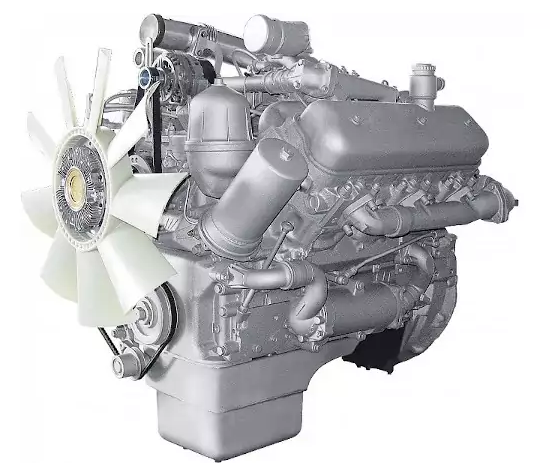
Let’s examine the differences between the YaMZ 7601 and the 236 Euro-2 engine. The old block, a cast-iron V6 with a 90° camber angle, cast-iron sleeves, and oil nozzles for piston cooling, was retained. The flywheel, pistons, piston rings, and connecting rods remain unchanged, but the crankshaft is slightly altered. There were 165 l/h oil pumps for the 7601 engines.
Specifications
| Number of cylinders | 6 |
| Valves | 12 |
| Displacement | 11,15 liters |
| Cylinder bore | 130 mm |
| Piston stroke | 140 mm |
| Compression ratio | 16,5 |
| Power output | 220 kW (300 hp) at 1900 rpm |
| Max torque output | 1275 Nm (130 kgs * m) at 1100-1300 rpm |
| Thrust-specific fuel consumption | 197 gram per kW / h (145 gram per hp / h) |
| Fuel consumption at speed 60 km/h | 32 liters per 100 km (for Ural-6368) |
| Oil consumption | up to 0.2% to diesel fuel consumption |
| Engine oil capacity | 24 liters |
| Weight | 1445 kg |
| Firing order | 1-4-2-5-3-6 |
| Engine lifespan | not less than 600 thousand km |
| Dimensions | |
| Length | 1270 mm |
| Width | 1045 mm |
| Height | 1100 mm |
Design Features
- alternator: 28V alternating current with a V-belt drive;
- electric starter with a 24V rating as the starting device;
- clutch: single-plate, dry friction, with asbestos-free linings and a diaphragm exhaust spring;
- 9-speed manual gearbox;
- split fuel supply system made by YAZDA. Six-section injection pump with plunger (in-line 135.5-10). It is an all-mode centrifugal speed controller. Fuel priming pump: a manual fuel priming pump with a piston;
- UEL filters: fine filter with a replaceable filter element;coarse cleaning with a replaceable filter element;
- cooling system: forced coolant circulation in a liquid, closed system. outfitted with a thermostatic mechanism to automatically regulate the engine’s temperature. The water pump is centrifugal and driven by a belt. Plate or tubular oil-liquid heat exchanger.
Frequent problems
- either starts and stops or stalls. Examine the fuel filters, pump, and check for air leaks. Occasionally, a foreign object may enter the tank.
- The engine is knocking. You must open the engine and examine the nozzles, pump, ignition, valves, rings, and liners in order to determine the cause.
- The cylinder head has cracks. It develops on the inter-valve jumper and is a common issue with these internal combustion engines.
Smokes:
- White smoke could indicate that there is water in the tank or that coolant is getting into the cylinders due to a cracked cylinder head or gasket;
- Black smoke: the lower power screw, which is probably unscrewed to the maximum, must be used to lower the fuel on the injection pump;
- Your oil is most likely burning if you see blue smoke.