
The French engine from Renault Trucks was translated into Russian using the YM3-650 6-cylinder in-line diesel engine. In 2006, the license to produce it in large quantities was obtained. Heavy trucks have made extensive use of this power unit, which has demonstrated its effectiveness. Because of the number of cylinders and the precisely matched order in which they operate, the motor is regarded as perfectly balanced.
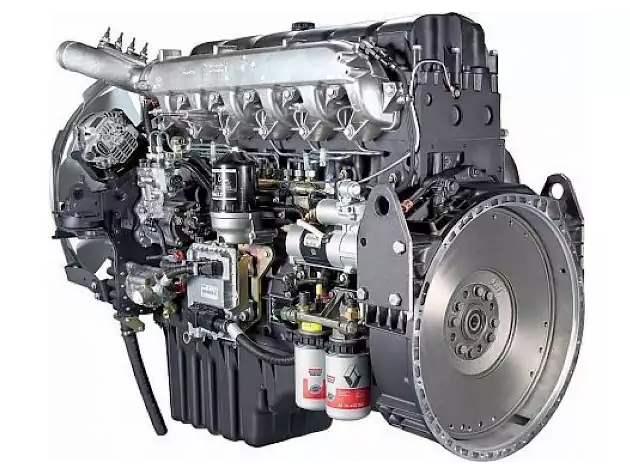
The YaMZ-65O is a 11.1-liter liquid-cooled turbocharged diesel engine that can produce up to 412 horsepower. The YaMZ-650 engine outperforms the V-shaped “eight” in terms of liter power (by 37.7%), torque (by 5.5%), weight (by 280 kg), and fuel consumption. An inline-six is also far more effective in terms of balance. The YM3-650 is significantly younger than domestic motors by design.
Specifications
| Engine’s type | diesel |
| Production years | 2006 |
| Power output, kW at rpm | 203-330 at 2000 |
| Power output, hp at rpm | 311-412 at 2000 |
| Displacement, cc | 11120 |
| Number of cylinders | 6 |
| Valves | 24 |
| Torque output, Nm / rpm | 1870 at 1300 |
| Compression ratio | 16.4:1 |
| Cylinder bore, mm | 123 |
| Piston stroke, mm | 156 |
| Configuration | 6-cylinder, inline |
| Fuel type | diesel |
| Fuel system | direct injection |
| Euro standards | Euro 3 |
| Cooling | liquid |
YA new line of diesel engines called the aMZ-650 is intended to:
- at room temperature between -60 °C and +50 °C;
- relative humidity at +25 °C up to 98%;
- dust concentration of up to 0.4 g/m3;
- in regions up to 1500 meters above sea level without a drop in power indicators, and up to 4500 meters above sea level with overcoming passes up to 4650 milliseconds with a corresponding drop in indicators.
These motors use an in-line six-cylinder cast iron cylinder block with oil spray nozzles to cool the pistons and wet cast iron liners. A steel crankshaft with a 156 mm piston stroke, 108 mm main journals, and 77 mm crank journals is mounted on seven supports inside. Pistons: aluminum, 123 mm in diameter; connecting rods: steel, 300 mm in length. Each of the six cylinders has four valves—two at the inlet and two at the outlet—in a single head. The block is where the camshaft is installed.
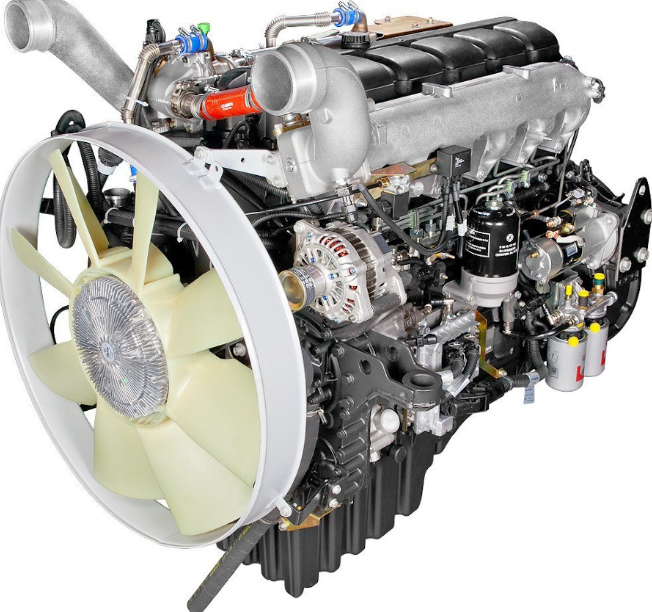
Glass fiber reinforced plastic is used to make the valve cover. To help lower overall noise levels, a rubber gasket isolates it from the engine. The engine’s front contains the camshaft and auxiliary gears. A centrifuge and two full-flow oil filters give the engine oil a high level of purity and an ideal drainage time. Increased power-to-weight ratios and other crucial metrics are provided by intercooled turbocharging.
The Bosch Common Rail fuel supply system of the second generation is the engine’s primary feature. Although it has an electronic nozzle control and a common storage pipeline, it looks like a traditional in-line injection pump. Each injector receives fuel from the accumulator via a separate fuel line. An electronic control system, which creates signals from the injector solenoid for the injection advance and delivery time, is the central component of a contemporary diesel engine. You can alter the unit’s settings in a variety of ways thanks to the system’s programmable component.
Two full-flow filters and a centrifuge are part of the lubrication system. Throughout its whole operating life, this design guarantees dependable engine performance. This system is important because diesel engines have a high degree of oil burnout.
The engine’s consumer features set it apart from all diesel engines of a comparable power range that are mass-produced in the Russian Federation. These features include:
- compactness for its integration into a variety of contemporary technologies;
- particular traits (power, weight) at the level of the top samples worldwide;
- motor resource: a minimum of one million kilometers of running;
- adherence to the most recent Euro-3 environmental standards and a positive foundation for reaching Euro-4;
- improved oil and fuel efficiency;
- the first automotive in-line engine for heavy vehicles and other equipment in the Russian Federation—a radically different layout system.