
Overview & Design Features
The Acura K20C5 engine represents a pinnacle of performance engineering within the Honda K-series family, specifically tailored for high-performance applications. Developed by Honda Motor Co., Ltd. for its premium Acura division, this 2.0-liter (1996 cc) inline-four engine integrates advanced technologies to deliver substantial power and responsiveness. It carries the legacy of the K-series, known for its robust architecture and tuning potential, while embracing modern forced induction for enhanced output, distinguishing itself as a performance-oriented powerplant.
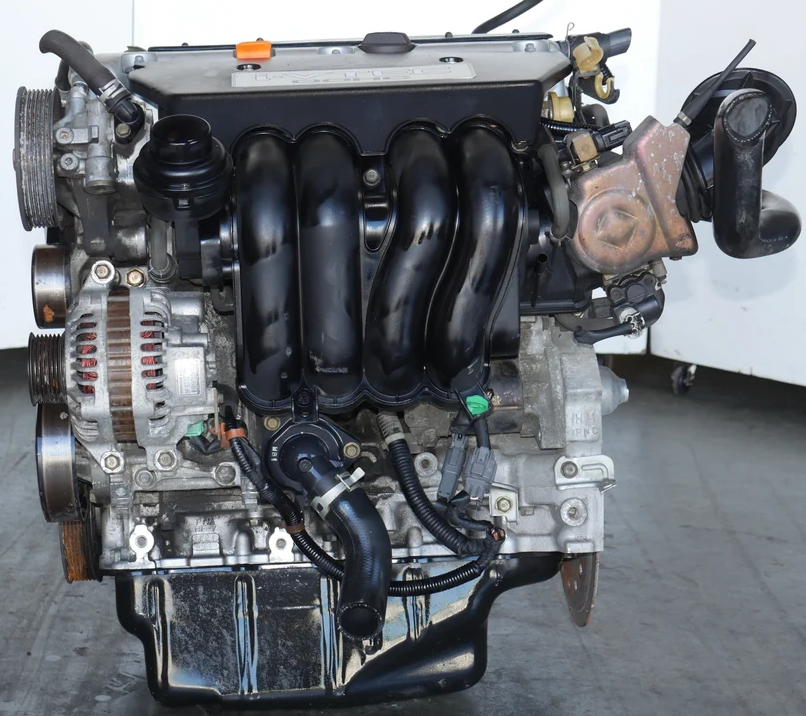
At its core, the K20C5 features an all-aluminum construction for both its cylinder block and cylinder head, contributing to reduced weight and efficient heat dissipation. The cylinder block utilizes a high-strength design, often incorporating a closed-deck structure for improved rigidity under the stresses of turbocharging. Fuel delivery is managed by a sophisticated direct injection (DI) system, which precisely atomizes fuel directly into the combustion chambers, optimizing combustion efficiency and power output while mitigating knock. Honda’s renowned i-VTEC (intelligent Variable Valve Timing and Lift Electronic Control) system is also employed, specifically on the exhaust camshaft, to fine-tune valve overlap and duration for improved throttle response, reduced turbo lag, and a broad powerband. A mono-scroll turbocharger is integral to the engine’s design, providing boost efficiently across various RPMs.
The K20C5 engine made its official debut in the 2024 model year and is exclusively deployed in the high-performance variant of Acura’s compact luxury sedan. Its primary application is found in the
2024 and newer Acura Integra Type S
trims, where it serves as the exclusive powertrain. This specific variant builds upon the formidable foundation of the K20C1 engine found in the Honda Civic Type R, with specific tuning and calibration tailored to the Acura brand’s performance and refinement objectives for the Integra Type S.
Technical Specifications
| Displacement (cc) | 1996 |
| Max Power (hp (kW) @ RPM) | 320 (239) @ 6500 |
| Max Torque (Nm (kg*m) @ RPM) | 420 (42.8) @ 2600-4000 |
| Fuel Type | Premium Unleaded (91+ Octane Recommended) |
| Fuel Consumption (l/100 km) | Approximately 9.8 (Combined, varies by driving conditions) |
| Engine Type | Inline-4, DOHC, Turbocharged |
| Compression Ratio | 9.8:1 |
| Cylinder Bore (mm) | 86.0 |
| Piston Stroke (mm) | 85.9 |
| Valvetrain | DOHC, Chain-driven, i-VTEC (Exhaust) |
| Valves per Cylinder | 4 (16 total) |
| Additional Info | Direct Injection, Mono-scroll Turbocharger |
Common Problems & Reliability
The K20C5, stemming from a highly reputable lineage, generally exhibits robust reliability. However, common issues associated with modern direct injection turbocharged engines can manifest. One notable concern is carbon buildup on the intake valves. Without the washing effect of fuel flowing over the intake valves (as in port injection), carbon deposits from oil vapor and exhaust gas recirculation can accumulate, potentially reducing airflow and engine efficiency over time. Regular preventative maintenance, including specialized fuel system cleaners and potentially intake valve cleaning services, is recommended.
Another area of consideration for turbocharged engines is the longevity of the turbocharger assembly. While engineered for durability, exposure to extreme heat cycles and high rotational speeds can lead to wear on bearings or seals over very high mileage. Careful adherence to oil change intervals and proper engine cool-down procedures after spirited driving are crucial for maximizing turbocharger life. Instances of oil dilution, while not as prevalent as in some other direct injection engines, can occur, where small amounts of fuel can enter the engine oil, potentially degrading its lubrication properties. Monitoring oil levels and adherence to the manufacturer’s oil change schedule is advised.
Under proper and diligent maintenance, including the use of specified lubricants and adherence to service schedules, the K20C5 engine can realistically be expected to achieve a service life exceeding 150,000 to 200,000 miles (240,000 to 320,000 km) before requiring any major internal overhaul.
Maintenance Tips & Service Schedule
Effective maintenance is paramount for ensuring the long-term performance and reliability of the K20C5 engine. Adherence to the manufacturer’s maintenance schedule, typically guided by the Honda/Acura Maintenance Minder system, is the best practice.
- Engine Oil & Filter: Utilize full synthetic engine oil conforming to API SP or a newer specification, with a viscosity grade of 0W-20 or 5W-30 as specified in the owner’s manual. Oil and filter changes are typically required every 5,000 to 7,500 miles (8,000 to 12,000 km) or annually, whichever comes first, or as indicated by the Maintenance Minder. Frequent short trips or aggressive driving may necessitate shorter intervals.
- Spark Plugs: Iridium-tipped spark plugs are standard and generally require replacement every 60,000 to 100,000 miles (96,000 to 160,000 km), or as recommended by the Maintenance Minder.
- Engine Air Filter: Inspect annually and replace as needed, typically every 15,000 to 30,000 miles (24,000 to 48,000 km), depending on driving conditions.
- Coolant: The engine utilizes Honda Type 2 long-life coolant. A flush and refill are generally recommended at 60,000 miles (96,000 km) or after 5 years, then every 30,000 miles (48,000 km) or 3 years thereafter.
- Timing Chain: The K20C5 employs a robust timing chain system, generally designed for the life of the engine. Regular oil changes are critical for timing chain longevity. Inspection at high mileages (e.g., 150,000 miles / 240,000 km) for excessive stretch or wear is a prudent measure, though not typically a scheduled replacement item.
- Fuel System Cleaning: Given the direct injection nature, periodic use of a high-quality fuel system cleaner designed for DI engines can help mitigate carbon buildup on injectors. For intake valve carbon, a professional induction cleaning service may be considered every 30,000-50,000 miles (48,000-80,000 km).
Conclusion
The Acura K20C5 engine stands as a testament to modern performance engineering, offering exhilarating power and sophisticated technology. For a used vehicle buyer, it represents a highly desirable powerplant, particularly for those seeking a balance of high performance and brand reliability. Its robust K-series foundation, coupled with direct injection and turbocharging, provides a dynamic driving experience. While it shares some maintenance considerations common to all direct injection turbocharged engines, such as potential carbon buildup and careful attention to oil quality and changes, these are manageable with proactive and diligent adherence to the factory maintenance schedule. When properly maintained, the K20C5 is an exceptionally reliable and durable choice, making vehicles equipped with this engine a sound investment for enthusiasts and daily drivers alike.