
Overview & Design Features
The GMC LML engine, commonly known as the 6.6-liter Duramax V8, represents a significant evolution in heavy-duty diesel engineering. Produced by the DMAX joint venture between General Motors and Isuzu, this power plant was introduced for the 2011 model year to succeed the LMM version. It was designed to meet stringent EPA emissions regulations while simultaneously delivering class-leading towing capacity and power. This engine quickly established a strong reputation for durability and performance in the heavy-duty utility vehicle segment.
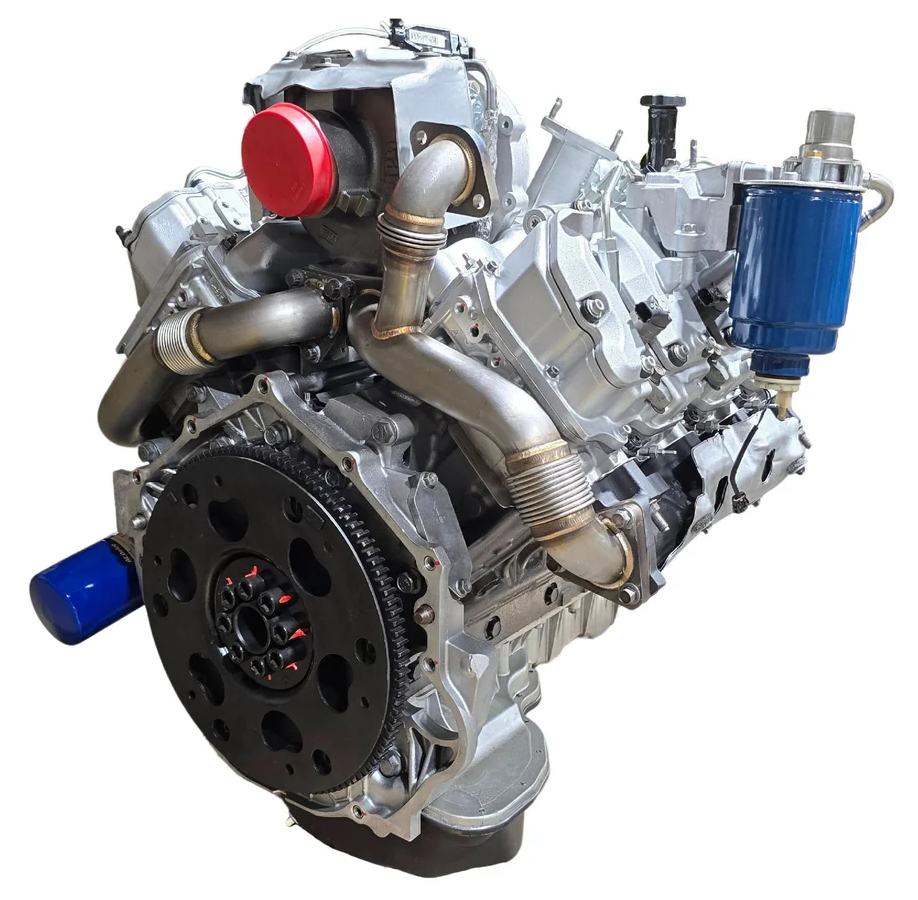
Engineering advancements for the LML focused heavily on structural integrity and combustion efficiency. The engine utilizes a heavy-duty cast iron cylinder block with a deep-skirt design and induction-hardened cylinder bores. The cylinder heads are constructed from cast aluminum and house a 32-valve overhead valve (OHV) configuration. Fuel delivery is managed by a high-pressure common-rail direct injection system featuring a Bosch CP4.2 injection pump and advanced piezo-electric injectors capable of multiple injection events per combustion cycle. Additionally, the engine incorporates a variable geometry turbocharger (VGT) to minimize turbo lag and optimize boost pressure across the entire operating range.
The GMC LML engine was primarily deployed in heavy-duty General Motors trucks and vans from the 2011 through 2016 model years. Specifically, it was the flagship diesel option for the GMC Sierra 2500HD and 3500HD, as well as the Chevrolet Silverado 2500HD and 3500HD. A slightly detuned version was also utilized in the GMC Savana and Chevrolet Express cargo and passenger vans during this same production era.
Technical Specifications
| Displacement (cc) | 6,599 cc (6.6 Liters) |
| Max Power (hp (kW) @ RPM) | 397 hp (296 kW) @ 3,000 RPM |
| Max Torque (Nm (kg*m) @ RPM) | 765 lb-ft (1,037 Nm) @ 1,600 RPM |
| Fuel Type | Ultra-Low Sulfur Diesel (ULSD) |
| Fuel Consumption (l/100 km) | Refer to manufacturer’s technical documentation |
| Engine Type | 90-degree V8 Turbodiesel |
| Compression Ratio | 16.0:1 |
| Cylinder Bore (mm) | 103 mm |
| Piston Stroke (mm) | 99 mm |
| Valvetrain | Overhead Valve (OHV), gear-driven camshaft |
| Valves per Cylinder | 4 (32 total valves) |
| Additional Info | Features selective catalytic reduction (SCR) with Diesel Exhaust Fluid (DEF) and an exhaust brake system. |
Common Problems & Reliability
While highly regarded for its overall toughness, the LML engine is associated with a few specific mechanical weaknesses. The most prominent concern centers around the Bosch CP4.2 high-pressure fuel pump. Unlike its predecessor, this pump lacks an integrated low-pressure lift pump to supply fuel from the tank, making it highly sensitive to fuel contamination or air pockets. If the pump suffers from fuel starvation or moisture contamination, it can fail catastrophically, sending metal debris throughout the entire fuel system, requiring a complete and costly system replacement.
Another area of concern involves the emission control systems. The selective catalytic reduction (SCR) system and the diesel particulate filter (DPF) are prone to sensor failures, DEF heater malfunctions, and soot buildup over time. Despite these vulnerabilities, the mechanical core of the engine is exceptionally robust. With meticulous maintenance and proactive component upgrades, the LML engine routinely achieves a service life exceeding 350,000 miles (approx. 560,000 km) before requiring a major overhaul.
Maintenance Tips & Service Schedule
To maximize the reliability of the LML engine, strict adherence to a professional maintenance program is essential. The fuel system demands the highest priority; the fuel filter must be replaced every 15,000 miles (24,000 km) using high-quality OEM or superior aftermarket filters to protect the sensitive Bosch CP4.2 pump. Installing an aftermarket auxiliary lift pump with an integrated air/water separator is highly recommended to mitigate the risk of pump failure.
- Engine Oil: Change the oil and filter every 7,500 to 10,000 miles (12,000 to 16,000 km). Use 15W-40 viscosity oil meeting API CJ-4 or CK-4 specifications. In extremely cold climates, transition to a 5W-40 synthetic formulation.
- Cooling System: Perform a complete flush of the Dex-Cool coolant every 150,000 miles (240,000 km) or 5 years, whichever occurs first.
- EGR and DPF Systems: Inspect the Exhaust Gas Recirculation (EGR) valve and cooler for carbon accumulation every 50,000 miles (80,000 km) and clean as necessary.
Conclusion
The GMC LML Duramax engine remains an outstanding option for buyers seeking a high-capability used heavy-duty truck. It offers an excellent balance of torque, refinement, and mechanical longevity. Provided the previous owners maintained the fuel and emissions systems properly, or if the buyer plans to invest in preventive upgrades such as an aftermarket fuel lift pump, this engine represents a highly secure and dependable investment for towing and heavy-haul applications.