
Overview & Design Features
The Cadillac GM V-8 472 is a venerable large-displacement, overhead-valve (OHV) V-8 engine produced by General Motors for its Cadillac division. Introduced in 1968, it marked a significant evolution in Cadillac’s powertrain lineup, superseding the previous 429 cubic inch (7.0 L) unit. With a displacement of 472 cubic inches (7.7 liters), the 472 was engineered to deliver substantial horsepower and prodigious torque, characteristic of luxury automobiles of its era, emphasizing smooth, effortless power delivery rather than high-revving performance. Its introduction coincided with a period of increasing demand for larger, more powerful engines in premium vehicles, establishing a new benchmark for Cadillac’s flagship models.
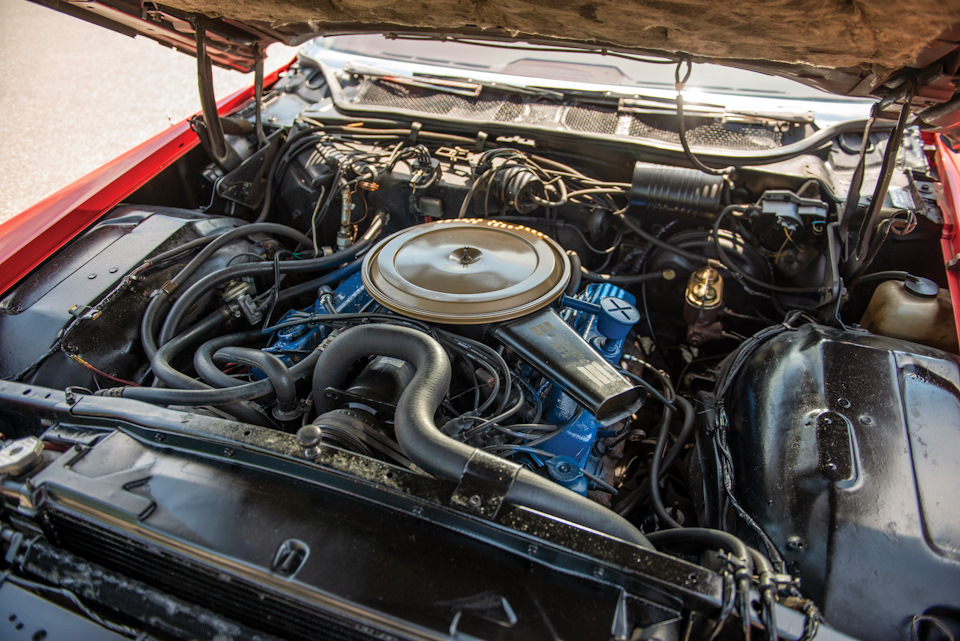
The 472 features a robust cast iron block and cylinder heads, a conventional two-valve-per-cylinder design, and a pushrod-actuated valvetrain with hydraulic lifters, ensuring quiet operation and reduced maintenance compared to mechanical lifters. Fuel delivery was exclusively via a single four-barrel Rochester Quadrajet carburetor throughout its production run. The engine utilized a conventional distributor-based ignition system. No advanced valve timing technologies, such as variable valve timing (VVT), or modern fuel injection systems like direct or port injection were present; these were innovations many decades in the future for production vehicles.
This engine was primarily deployed across Cadillac’s full-size luxury vehicle range. The 472 was a standard or optional engine in models such as the Cadillac Calais, DeVille (including Coupe DeVille and Sedan DeVille), Fleetwood Brougham, and the Fleetwood Eldorado (until the introduction of the 500 cubic inch engine in 1970). Its production spanned from the 1968 model year through 1974, though its primary role was increasingly supplanted by the even larger 500 cubic inch (8.2 L) engine which it directly inspired, particularly in the Eldorado.
Technical Specifications
| Displacement (cc) | 7735 cc (472 cu in) |
| Max Power (hp (kW) @ RPM) | 375 hp (280 kW) @ 4400 RPM (Gross, 1970 model) |
| Max Torque (Nm (kg*m) @ RPM) | 712 Nm (72.6 kg*m) @ 3000 RPM (Gross, 1970 model) |
| Fuel Type | Leaded Gasoline (Premium recommended for early, higher compression versions) |
| Fuel Consumption (l/100 km) | Refer to manufacturer’s technical documentation |
| Engine Type | OHV V-8 |
| Compression Ratio | 10.5:1 (early models, later reduced to ~8.5:1) |
| Cylinder Bore (mm) | 109.2 mm (4.300 in) |
| Piston Stroke (mm) | 103.1 mm (4.060 in) |
| Valvetrain | Overhead Valve (OHV), Pushrod, Hydraulic Lifters |
| Valves per Cylinder | 2 |
| Additional Info | Cast Iron Block & Heads, Rochester Quadrajet Carburetor |
Common Problems & Reliability
The Cadillac 472 V-8 is largely known for its robust construction and inherent durability, a characteristic shared with many large American V-8s of its era. However, common issues observed in engines of this age and design include oil leaks, particularly from the rear main seal, valve covers, and oil pan gaskets. These are often attributable to degraded original seals and gaskets after decades of service and heat cycles. Carburetor wear and calibration drift are also typical, leading to rough idle, poor fuel economy, and hesitation; rebuilding or replacing the Rochester Quadrajet unit is a common remedy.
Another area requiring attention on older 472s is the cooling system. Radiators, water pumps, and hoses can deteriorate over time, leading to overheating if not regularly inspected and serviced. Exhaust manifold leaks are also not uncommon, usually due to warping or cracking of the cast iron manifolds or failed gaskets. The engine’s realistic expected service life, assuming diligent maintenance and addressing these common age-related issues, is typically in the range of 150,000 to 200,000 miles before a major overhaul might be considered for optimal performance and seal integrity.
Maintenance Tips & Service Schedule
Maintaining a Cadillac 472 engine primarily revolves around addressing the wear and tear associated with its age and design. Regular engine oil and filter changes are paramount. A suitable viscosity for most climates and engine wear conditions is SAE 10W-30 or 10W-40, though 20W-50 may be preferred for high-mileage engines in hotter climates. Changes should occur every 3,000 miles or every six months, whichever comes first. Given the engine’s age, a conventional oil with higher zinc (ZDDP) content is recommended to protect the flat-tappet camshaft and lifters.
Spark plugs should be inspected annually and replaced approximately every 15,000-20,000 miles to ensure optimal ignition and fuel efficiency. The cooling system requires a complete coolant flush and refill every 2-3 years, utilizing a high-quality anti-freeze/coolant. Regular inspection of all hoses, belts, and the radiator for leaks or deterioration is critical. The carburetor should be periodically inspected for proper operation and adjusted for optimal idle and mixture, or rebuilt if significant wear is present. Ignition timing should be checked and adjusted according to factory specifications at least every tune-up cycle. The sturdy timing chain typically does not require replacement during the engine’s normal service life unless unusual noise or wear is detected.
Conclusion
The Cadillac GM V-8 472 represents a pinnacle of American automotive engineering for its era, designed for longevity and smooth, powerful operation. For a used vehicle buyer, an engine of this type, when properly maintained throughout its life, can still be a reliable choice, offering a unique classic driving experience. Its straightforward, robust design means that most common issues are identifiable and repairable using readily available parts and established mechanical practices. While fuel economy is not a strong suit, the 472’s inherent durability and the plentiful availability of expertise for these classic powerplants make it a solid foundation for a vintage Cadillac, provided the buyer is prepared for routine maintenance consistent with a nearly 50-year-old engine.