
Overview & Design Features
The Cadillac GM V-8 500 engine represents a significant chapter in American automotive engineering, standing as one of the largest production automotive V8 engines ever manufactured. Introduced by Cadillac in 1970, this monumental powerplant, with a displacement of 8.2 liters (500 cubic inches), was designed to provide prodigious torque and smooth, effortless power for Cadillac’s flagship luxury vehicles. Its development coincided with the peak of the muscle car era, though its application was firmly rooted in the luxury segment, prioritizing refinement and substantial performance.
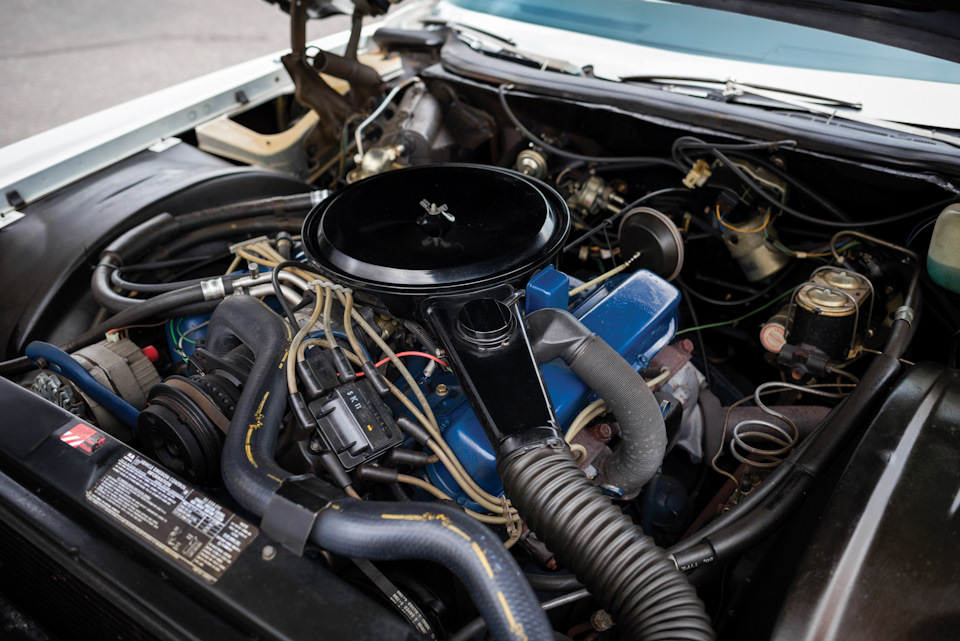
The GM V-8 500 featured a robust cast iron cylinder block and cylinder heads, ensuring durability and quiet operation. It employed a traditional overhead valve (OHV) pushrod design, utilizing two valves per cylinder. Fuel delivery was primarily managed by a four-barrel Rochester Quadrajet carburetor, a hallmark of American V8s from that era. Compression ratios varied throughout its production run, initially high for maximum power and later reduced in response to stricter emissions regulations and the shift to unleaded gasoline. Despite its massive size, the engine was engineered for smooth power delivery characteristic of Cadillac’s luxury aspirations.
The Cadillac GM V-8 500 engine was prominently featured in several Cadillac models during its production from 1970 to 1976. Its primary applications included the opulent Cadillac Eldorado (1970-1976), the luxurious Cadillac DeVille (1970-1975), and the prestigious Cadillac Fleetwood Brougham and Fleetwood Seventy-Five (1970-1975). Early iterations of the engine delivered substantial gross horsepower, which was subsequently reduced in later models due to the implementation of net horsepower ratings and federal emissions standards.
Technical Specifications
| Specification | Value |
|---|---|
| Displacement (cc) | 8194.7 cc (500 cu in) |
| Max Power (hp (kW) @ RPM) | Up to 400 hp (298 kW) @ 4400 RPM (1970 gross); ~235 hp (175 kW) @ 3600 RPM (1976 net) |
| Max Torque (Nm (kg*m) @ RPM) | Up to 746 Nm (76.0 kg*m) @ 3000 RPM (1970 gross); ~542 Nm (55.3 kg*m) @ 2000 RPM (1976 net) |
| Fuel Type | Gasoline (initially leaded, later low-lead/unleaded compatible) |
| Fuel Consumption (l/100 km) | Typically 20-25 l/100 km (combined, dependent on vehicle and tune) |
| Engine Type | Naturally Aspirated OHV V8 |
| Compression Ratio | Varied by year, e.g., 10.0:1 (1970) to 8.2:1 (1976) |
| Cylinder Bore (mm) | 109.22 mm (4.300 in) |
| Piston Stroke (mm) | 109.22 mm (4.300 in) |
| Valvetrain | Pushrod OHV |
| Valves per Cylinder | 2 |
| Additional Info | Cast iron block and heads, Rochester Quadrajet 4-barrel carburetor, one of the largest production V8 engines |
Common Problems & Reliability
The Cadillac GM V-8 500 is known for its fundamental robustness, but specific areas are prone to wear or require attention due to age and design. A primary concern is the timing chain assembly. Early versions utilized a nylon-coated camshaft sprocket, which can degrade over time, leading to broken teeth and retarded valve timing. This can result in rough running, power loss, and potentially engine damage if not addressed. Another common issue involves oil leaks, particularly from the rear main seal, valve covers, and oil pan gaskets. These leaks are often exacerbated by aged seals and prolonged periods of inactivity.
Furthermore, the Rochester Quadrajet carburetor can develop issues over decades of use, including worn throttle shafts causing vacuum leaks, clogged passages, and maladjustment. This can lead to poor fuel economy, hard starting, and rough idling. Overheating is also a potential problem if the cooling system components (radiator, water pump, hoses) are not diligently maintained. With proper and consistent maintenance, including proactive replacement of wear items like the timing chain, a Cadillac 500 engine can realistically achieve a service life of 150,000 to 200,000 miles before requiring a major overhaul.
Maintenance Tips & Service Schedule
Maintaining the Cadillac GM V-8 500 engine is crucial for its longevity and optimal performance. Regular engine oil and filter changes are paramount, recommended every 3,000 miles (5,000 km) or every six months, using a conventional 10W-30 or 10W-40 motor oil. Given the engine’s age and design, a high-zinc (ZDDP) oil is often beneficial for protecting the flat-tappet camshaft. Spark plugs should be inspected and replaced every 30,000 miles (50,000 km).
The timing chain and sprockets warrant careful attention; inspection is recommended around 60,000 miles (100,000 km), with replacement strongly advised if nylon sprocket degradation is evident, regardless of mileage, for engines that have not had this service performed. The cooling system requires regular flushes every 2 years or 30,000 miles (50,000 km), along with inspection of hoses, belts, and the radiator for wear or leaks. The fuel filter should be replaced annually or every 12,000 miles (20,000 km). Regular inspection and tuning of the carburetor by a specialist are also essential to ensure proper air-fuel mixture and prevent performance issues. Addressing oil leaks promptly by replacing seals and gaskets is vital to prevent fluid loss and contamination.
Conclusion
The Cadillac GM V-8 500 engine, while a product of its era with corresponding characteristics such as high fuel consumption, remains a fundamentally robust and impressive powertrain. For a used vehicle buyer, it represents a potentially reliable choice, provided the specific engine has been subject to a history of diligent maintenance. Its substantial displacement translates to immense, low-stress torque, offering a characteristically smooth and powerful driving experience. Critical considerations include verifying the status of the timing chain, assessing for significant oil leaks, and evaluating carburetor condition. With proper preventative maintenance and an understanding of its vintage specificities, this iconic Cadillac V8 can continue to provide many years of luxurious motoring.