
From 2010 to 2017, the company produced the 2.0-liter Volkswagen CLJA 2.0 TDI engine, which was fitted to the second generation Skoda Superb and the redesigned Tiguan model. This diesel is part of an updated series that uses electromagnetic injectors in place of piezo ones.
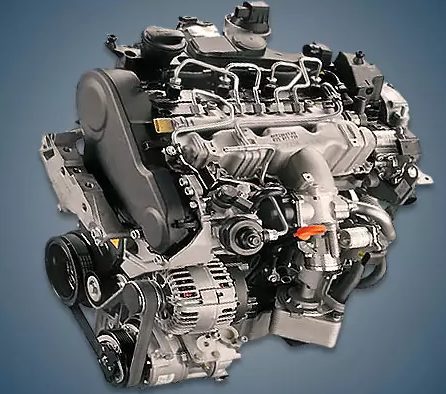
The following are also included in the EA189 series: CAYC, CAAC, CAGA, CAHA, CBAB, CFCA, CFGB, CLCA, CLJA, CKTB, CFHC, and CKUB.
Specifications
| Production years | 2010-2017 |
| Displacement, cc | 1968 |
| Fuel system | Common Rail |
| Power output, hp | 140 |
| Torque output, Nm | 320 |
| Cylinder block | cast iron R4 |
| Block head | aluminum 16v |
| Cylinder bore, mm | 81 |
| Piston stroke, mm | 95.5 |
| Compression ratio | 16.5 |
| Features | DOHC, intercooler |
| Hydraulic lifters | yes |
| Timing drive | belt |
| Phase regulator | no |
| Turbocharging | VGT |
| Recommended engine oil | 5W-30 |
| Engine oil capacity, liter | 4.3 |
| Fuel type | diesel |
| Euro standards | EURO 5 |
| Fuel consumption, L/100 km (for Volkswagen Tiguan 2012) — city — highway — combined |
9.2 5.9 7.1 |
| Engine lifespan, km | ~350 000 |
| Weight, kg | 165 |
The engine was installed on:
- Skoda Superb 2 (3T) in 2010 – 2015;
- Volkswagen Tiguan 1 (5N) in 2011 – 2017.
Disadvantages of the VW CLJA engine
This diesel engine is incredibly dependable and has already overcome the shortcomings of its predecessors;
There are electromagnetic injectors in place of erratic piezo injectors, and swirl flaps are absent;
The timing belt is intended to last 210 thousand kilometers, according to the regulations, but the valves bend when it breaks;
Here, oil leaks from beneath the plastic valve covers happen frequently;
A particulate filter or an EGR valve can cause significant problems at high mileage.