
From 1997 until 2016, the company produced the 1.5-liter 8-valve Daewoo A15SMS engine, which was fitted to the well-known Lanos, Nexia, and Chevrolet Aveo models under the F15S3 index. This power unit is basically an updated version of the well-known G15MF motor.
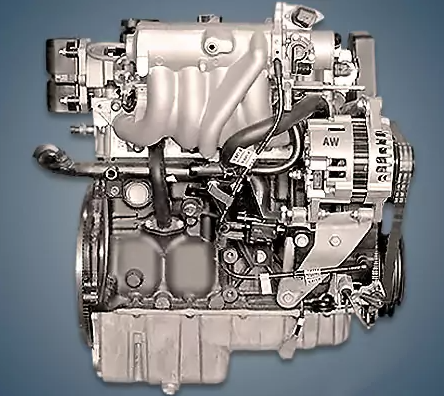
A16DMS is another member of the MS series.
Another modification of the GM Family 1 series engines for EURO 3 environmental standards, the E-TEC gasoline engines were first assembled in 1997 at the GM-Daewoo factory in Korea. A 1.5-liter power unit with the A15SMS index was one of this line’s representatives. The most popular engine has an aluminum 8-valve cylinder head with hydraulic lifters, a timing belt drive, a cast-iron cylinder block, and distributed fuel injection.
Specifications
| Production years | 1997-2016 |
| Displacement, cc | 1498 |
| Fuel system | distributed injection |
| Power output, hp | 80 – 86 |
| Torque output, Nm | 123 – 130 |
| Cylinder block | cast iron R4 |
| Block head | aluminum 8v |
| Cylinder bore, mm | 76.5 |
| Piston stroke, mm | 81.5 |
| Compression ratio | 9.5 |
| Features | no |
| Hydraulic lifters | yes |
| Timing drive | belt |
| Phase regulator | no |
| Turbocharging | no |
| Recommended engine oil | 5W-30 |
| Engine oil capacity, liter | 3.75 |
| Fuel type | petrol |
| Euro standards | EURO 3 |
| Fuel consumption, L/100 km (for Daewoo Lanos 2002) — city — highway — combined |
10.4 5.2 6.7 |
| Engine lifespan, km | ~300 000 |
| Weight, kg | 117 |
The engine was installed on:
- Daewoo Lanos 1 (T100) in 1997 – 2002;
- Daewoo Lanos T150 in 2000 – 2008;
- Daewoo Nexia N150 in 2008 – 2016.
Disadvantages of the Daewoo A15SMS engine
Cheap Daewoo and Chevrolet models frequently have unreliable radiators that leak after 50,000 kilometers, and this cylinder head cannot tolerate severe overheating.
This engine is prone to lubrication leaks, which frequently seep out from under the valve cover and land squarely on the timing belt. When the timing belt breaks, the valves typically bend.
Unreliable attachments cause a lot of issues for the owners; in this case, the water pump leaks, the thermostat wedges, and the starter frequently fails.
The engine compartment wiring harness is frequently frayed, the sensors are unreliable, and the hydraulic compensators here cannot withstand low-quality oil and can knock up to 50,000 kilometers. An oil burner frequently develops at high mileage as a result of valve stem seal wear.