
From 1997 to 2008, the company produced the 2.0-liter 16-valve Daewoo X20SED engine, which was fitted on the majority of its models at the time, including the Leganza, Nubira, and Lacetti. In essence, this power unit is an improved Opel X20XEV engine.
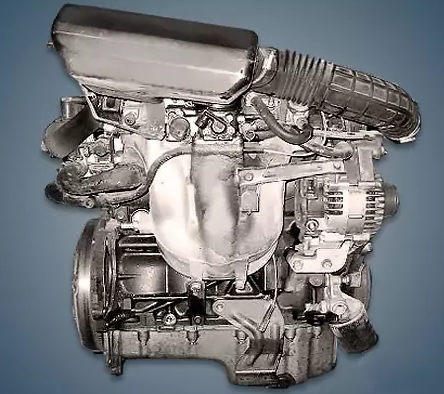
SE-series: T18SED, X20SED, T22SED.
Specifications
| Production years | 1997-2008 |
| Displacement, cc | 1998 |
| Fuel system | distributed injection |
| Power output, hp | 121 – 133 |
| Torque output, Nm | 175 – 185 |
| Cylinder block | cast iron R4 |
| Block head | aluminum 16v |
| Cylinder bore, mm | 86 |
| Piston stroke, mm | 86 |
| Compression ratio | 9.6 |
| Features | no |
| Hydraulic lifters | yes |
| Timing drive | belt |
| Phase regulator | no |
| Turbocharging | no |
| Recommended engine oil | 5W-30 |
| Engine oil capacity, liter | 4.25 |
| Fuel type | petrol |
| Euro standards | EURO 2 |
| Fuel consumption, L/100 km (for Daewoo Tacuma 2002) — city — highway — combined |
12.0 7.2 9.0 |
| Engine lifespan, km | ~350 000 |
| Weight, kg | 140 |
The engine was installed on:
- Daewoo Evanda V200 in 2000 – 2006;
- Daewoo Lacetti J200 in 2002 – 2007;
- Daewoo Leganza V100 in 1997 – 2008;
- Daewoo Magnus V200 in 2000 – 2006;
- Daewoo Nubira J150 in 1997 – 2003;
- Daewoo Tacuma U100 in 2000 – 2008;
- Chevrolet Evanda 1 (V200) in 2004 – 2006;
- Chevrolet Lacetti 1 (J200) in 2004 – 2008.
Disadvantages of the Daewoo X20SED engine
Leaks and floating engine speeds are the unit’s primary issues, and it has few claims;
Contamination of the idle speed controller or crankcase ventilation is the cause of unstable idling;
The exhaust manifold is unreliable and frequently just blows up;
The camshaft position sensor is the electrical component’s weak point;
The timing belt resource is roughly 60,000 kilometers long, and the valves always bend when it breaks.