
Since 2014, the company has been producing the 1.5-liter Mini Cooper D B37C15A diesel engine, which is fitted on all third-generation models, including the Clubman and Countryman. In essence, this power unit is a member of the BMW B37 diesel family.
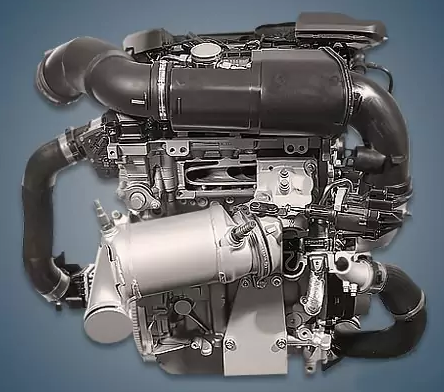
W17D14, W16D16, N47C16A, N47C20A, B37C15A, and B47C20A are MINI diesel engines.
Specifications
| Production years | since 2014 |
| Displacement, cc | 1496 |
| Fuel system | Common Rail |
| Power output, hp | 95 116 |
| Torque output, Nm | 220 270 |
| Cylinder block | aluminum R3 |
| Block head | aluminum 12v |
| Cylinder bore, mm | 84 |
| Piston stroke, mm | 90 |
| Compression ratio | 16.5 |
| Features | DOHC, intercooler |
| Hydraulic lifters | yes |
| Timing drive | chain |
| Phase regulator | no |
| Turbocharging | Mahle BV065 |
| Recommended engine oil | 5W-30 |
| Engine oil capacity, liter | 4.4 |
| Fuel type | diesel |
| Euro standards | EURO 6 |
| Fuel consumption, L/100 km (for Mini Cooper D 2018) — city — highway — combined |
4.3 3.1 3.5 |
| Engine lifespan, km | ~270 000 |
The engine was installed on:
- Mini Cabrio 3 (F57) in 2016 – 2019;
- Mini Clubman 2 (F54) since 2015;
- Mini Countryman 2 (F60) since 2017;
- Mini Hatch F55 in 2014 – 2019;
- Mini Hatch 3 (F56) in 2014 – 2019.
Disadvantages of the Mini B37C15A engine
The EGR valve, also known as the AGR here, is the primary cause of the owner’s issues; it is responsible for abrupt traction dips, power loss, and twitches.
The timing chains are now slightly more dependable and can travel up to 200,000 kilometers when compared to the N47 diesel engine;
However, soot and jam also quickly overgrow the intake swirl flaps here; as usual, a particulate filter and piezo injectors cause a lot of problems.