
From 2009 to 2019, the Renault V4U 2.5-liter V6 engine was manufactured in Japanese factories and fitted to the popular Latitude sedan in Europe as well as its Korean counterparts, the Samsung SM5 and SM7. In essence, the device is a clone of the Japanese Nissan VQ25DE engine’s second generation.
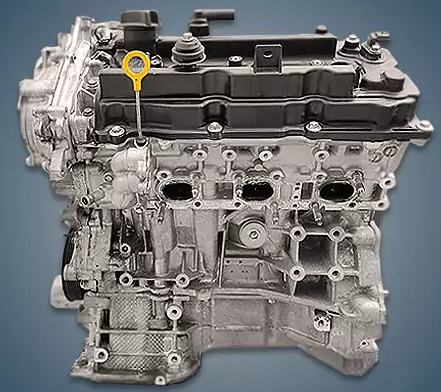
B4A, B4D, H4D, H4M, M4R, M5R, 2TR, V4U, and V4Y are the SCe line.
Specifications
| Production years | 2009-2019 |
| Displacement, cc | 2495 |
| Fuel system | distributed injection |
| Power output, hp | 175 – 180 |
| Torque output, Nm | 230 – 235 |
| Cylinder block | aluminum V6 |
| Block head | aluminum 24v |
| Cylinder bore, mm | 85 |
| Piston stroke, mm | 73.3 |
| Compression ratio | 10.3 |
| Features | ECCS, NDIS |
| Hydraulic lifters | no |
| Timing drive | chain |
| Phase regulator | at the intake |
| Turbocharging | no |
| Recommended engine oil | 5W-30 |
| Engine oil capacity, liter | 4.6 |
| Fuel type | petrol |
| Euro standards | EURO 5 |
| Fuel consumption, L/100 km (for Renault Latitude 2012) — city — highway — combined |
13.4 7.7 9.7 |
| Engine lifespan, km | ~350 000 |
| Weight, kg | 185 |
The engine was installed on:
- Renault Latitude 1 (L70) in 2010 – 2015;
- Samsung SM5 3 (L43) in 2009 – 2019;
- Samsung SM7 2 (L47) in 2011 – 2019.
Disadvantages of the Renault V4U engine
This unit cannot run on poor fuel or with defective spark plugs.
As a result, the engine cylinders are raised by the catalysts’ crumbs, which are rapidly destroyed.
Paper oil channel gaskets are frequently squeezed out beneath the front cover.
The timing chain is frequently already replaced by 200,000 kilometers of run, so its resources are also the same.
Additionally, the water pump here doesn’t last very long, and the motor is terrified of overheating.