
Since 2008, the company has been manufacturing the 2.4-liter Suzuki J24B gasoline engine. There are two versions of the engine with the longitudinal and transverse arrangement under the hood because it was only ever installed on two models: the Grand Vitara crossover and the Kizashi sedan.
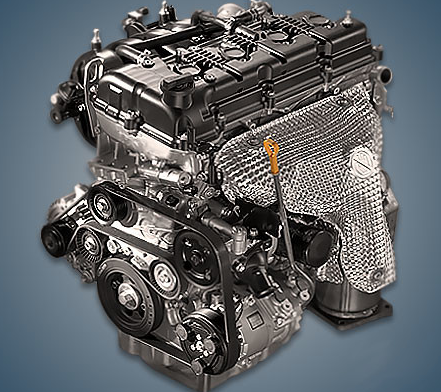
J-series engines include the J18A, J20A, J20B, J23A, and J24B.
In 2008, the Grand Vitara was redesigned with a 2.4-liter J-engine. This engine, which had an aluminum cylinder block, cast-iron liners, an open cooling jacket, a 16-valve cylinder head without hydraulic lifters, a timing chain, a variable valve timing system at the intake, and distributed fuel injection, was common at the time. Additionally, this unit has an intake manifold with an IMT geometry change system.
Specifications
| Production years | since 2008 |
| Displacement, cc | 2393 |
| Fuel system | distributed injection |
| Power output, hp | 165 – 185 |
| Torque output, Nm | 225 – 230 |
| Cylinder block | aluminum R4 |
| Block head | aluminum 16v |
| Cylinder bore, mm | 92 |
| Piston stroke, mm | 90 |
| Compression ratio | 10.0 |
| Hydraulic lifters | no |
| Timing drive | chain |
| Phase regulator | at the intake |
| Turbocharging | no |
| Recommended engine oil | 0W-20, 0W-30 |
| Engine oil capacity, liter | 4.8 |
| Fuel type | petrol |
| Euro standards | EURO 4/5 |
| Fuel consumption, L/100 km (for Suzuki Grand Vitara 2010) — city — highway — combined |
11.4 7.6 9.0 |
| Engine lifespan, km | ~300 000 |
The engine was installed on:
- Suzuki Escudo 3 (JT) in 2008 – 2017;
- Suzuki Grand Vitara 2 (JT) since 2008;
- Suzuki Kizashi 1 (RE) in 2009 – 2016.
Disadvantages of the Suzuki J24B engine
During the first two years of production, it was common to find cracks in the cooling jacket, antifreeze seeping into the lubricant, and defective cylinder blocks simply leaving the assembly line. Although the engine is still available, the manufacturer replaced the motors while it was still covered under warranty.
The second most common issue is overheating-related cylinder head cracking, so you must keep a close eye on how clean the cooling system’s radiator is. Such a problem is particularly prevalent on power units from the initial years of production.
Although this leaf timing chain is intended to last the engine’s whole life, it frequently extends to 150,000 kilometers, and occasionally much earlier. The phase regulator typically needs to be changed in addition to the circuit, which doubles the cost of repairs.
Additionally, they frequently complain about the oil burner on specialized forums because of piston rings, rapidly tanning oil seals and valve stem seals, and frequent lubricant leaks. Every 30,000 kilometers, it is recommended to check the condition of the candles and the thermal clearances of the valves.