
Since 2010, the Japanese company has been producing the 1.4-liter Suzuki K14B gasoline engine, which is found in many well-known small models like the Swift, Baleno, and Ertiga. Cars made by the Chinese company Changan with the JL473Q1 index currently have this motor installed.
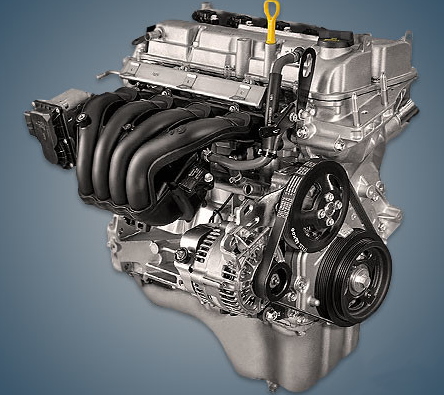
K-series engines include the K6A, K10A, K10B, K12B, K14C, K14B, and K15B.
Specifications
| Production years | since 2010 |
| Displacement, cc | 1372 |
| Fuel system | distributed injection |
| Power output, hp | 92 – 101 |
| Torque output, Nm | 120 – 130 |
| Cylinder block | aluminum R4 |
| Block head | aluminum 16v |
| Cylinder bore, mm | 73 |
| Piston stroke, mm | 82 |
| Compression ratio | 10.0 – 11.0 |
| Features | DOHC |
| Hydraulic lifters | no |
| Timing drive | chain |
| Phase regulator | at the intake |
| Turbocharging | no |
| Recommended engine oil | 5W-30 |
| Engine oil capacity, liter | 3.1 |
| Fuel type | petrol |
| Euro standards | EURO 5 |
| Fuel consumption, L/100 km (for Suzuki Swift 2012) — city — highway — combined |
6.3 4.6 5.2 |
| Engine lifespan, km | ~300 000 |
The engine was installed on:
- Suzuki Baleno 2 (EW) since 2015;
- Suzuki Ciaz 1 (VC) since 2014;
- Suzuki Ertiga 1 (ZE) in 2012 – 2018;
- Suzuki Swift 4 (NZ) in 2010 – 2017.
Disadvantages of the Suzuki K14B engine
This motor proved to be incredibly dependable, but it only worries about minor issues;
Nozzle and throttle contamination is the primary cause of unstable operation.
A crack in one of the ignition coils is typically the cause of a cylinder’s malfunction;
There are grievances regarding this motor’s lengthy winter warm-up;
There are no hydraulic lifters, and valve clearance needs to be adjusted every 100,000 kilometers.