
From 1999 to 2018, the company produced the 1.3-liter Suzuki M13A gasoline engine, which was fitted to numerous well-known Japanese models, including the Ignis, Jimny, and Swift. This power unit was available in versions with and without a phase shifter at the intake.
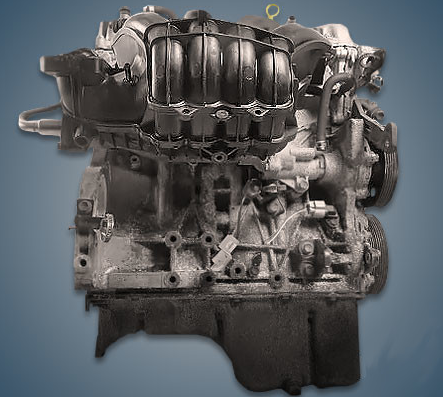
M-series engines: M13A, M15A, M16A, and M18A.
The first 1.3-liter M family unit debuted on the Suzuki Wagon R Solio in 1999. The engine features a timing chain drive, an aluminum 16-valve cylinder head without hydraulic lifters, an aluminum cylinder block with cast-iron liners and an open cooling jacket, distributed fuel injection, and a VVT variable valve timing system on the intake camshaft.
In the early years of production, some motor modifications lacked a phase regulator; when they did, they were frequently referred to as M13AA to set them apart from their predecessors.
Specifications
| Production years | 1999-2018 |
| Displacement, cc | 1328 |
| Fuel system | distributed injection |
| Power output, hp | 82 – 94 |
| Torque output, Nm | 110 – 118 |
| Cylinder block | aluminum R4 |
| Block head | aluminum 16v |
| Cylinder bore, mm | 78 |
| Piston stroke, mm | 69.5 |
| Compression ratio | 9.5 |
| Hydraulic lifters | no |
| Timing drive | chain |
| Turbocharging | no |
| Recommended engine oil | 5W-30, 5W-40 |
| Engine oil capacity, liter | 4.2 |
| Fuel type | petrol |
| Euro standards | EURO 3/4 |
| Fuel consumption, L/100 km (for Suzuki Jimny 2010) — city — highway — combined |
9.3 6.2 7.3 |
| Engine lifespan, km | ~350 000 |
| Weight, kg | 90 (without attachments) |
The engine was installed on:
- Suzuki Ignis 1 (FH) in 2000 – 2006; Ignis 2 (MH) in 2003 – 2008;
- Suzuki Jimny 3 (FJ) in 2001 – 2018;
- Suzuki Liana 1 (ER) in 2001 – 2006;
- Suzuki Swift 3 (MZ) in 2004 – 2010;
- Suzuki Wagon R Solio 1 (MA63) in 1999 – 2010;
- Subaru Justy 3 (MHY) in 2003 – 2007.
Disadvantages of the Suzuki M13A engine
The wear of the oil scraper rings and caps is the primary cause of the oil burner’s motor issue. However, examine the state of the seats and valve guides if replacing them is ineffective.
This aluminum motor frequently breaks through the cylinder head gasket due to its fear of overheating. Due to a slight subsidence of the sleeves, the situation is typically made worse by 200,000 km.
Floating idle speeds are a common problem for even the owners of these engines. The throttle assembly’s banal contamination is typically the cause, with the EGR valve being the cause less frequently.
Certain sensors, particularly the crankshaft position sensor and the camshaft position sensor, are also not very dependable. In this case, ignition coils are frequently used and occasionally replaced along with candles.
This powertrain’s shortcomings include a short-lived catalyst, mounts, and a frequently leaking lubricant pressure sensor. Additionally, remember to adjust the valves.