
From 1996 until 2005, the company produced the Suzuki H25A 2.5-liter V6 gasoline engine, which was exclusively used in the Grand Vitara SUV and its knockoffs, including the Chevrolet Tracker. The power unit’s output was 144 horsepower and 208 Nm until 2002, at which point it reached 158 horsepower and 213 Nm.
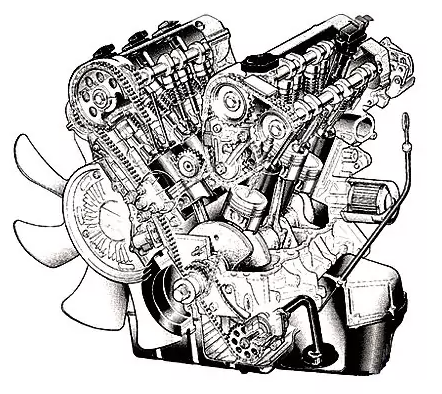
H-series engines: H20A, H25A, and H27A.
The H20A engine debuted on the first generation Escudo in 1996, but the second Escudo, also known as the Grand Vitara, was the vehicle that used it the most. With a cylinder camber angle of 60° and distributed fuel injection, two aluminum DOHC cylinder heads with hydraulic compensators, an aluminum cylinder block with cast-iron liners, and a sophisticated timing drive of their three chains, this is a typical V6 unit for its era.
Specifications
| Production years | 1996-2005 |
| Displacement, cc | 2493 |
| Fuel system | distributed injection |
| Power output, hp | 144 – 158 |
| Torque output, Nm | 208 – 213 |
| Cylinder block | aluminum V6 |
| Block head | aluminum 24v |
| Cylinder bore, mm | 84 |
| Piston stroke, mm | 75 |
| Compression ratio | 9.5 |
| Hydraulic lifters | yes |
| Timing drive | chains |
| Turbocharging | no |
| Recommended engine oil | 5W-30, 5W-40 |
| Engine oil capacity, liter | 5.7 |
| Fuel type | petrol |
| Euro standards | EURO 3 |
| Fuel consumption, L/100 km (for Suzuki Grand Vitara 2001) — city — highway — combined |
13.5 8.3 10.2 |
| Engine lifespan, km | ~400 000 |
The engine was installed on:
- Suzuki Escudo 1 (ET) in 1996 – 1998; Escudo 2 (FT) in 1998 – 2005;
- Suzuki Grand Vitara 1 (FT) in 1998 – 2005.
Disadvantages of the Suzuki H25A engine
Three chains and three hydraulic tensioners make up this gas distribution mechanism, which places strict requirements on the oil’s quality and replacement process. Savings become a chain jump that kills the motor and a tensioner wedge.
An oil burner frequently appears after 150,000 kilometers and increases quickly with mileage. The clogged oil labyrinth of the valve covers, which is a component of the crankcase ventilation system, is the primary cause, not the wear of the rings or caps.
Lubricant leaks are one of the most common issues with H line power units. Oil typically seeps through the oil channel gaskets at the block’s intersection with the crankshaft bed or pan, under the engine’s front cover, and through both crankshaft oil seals.
These motors’ shortcomings include a rapidly clogged EGR valve, an unreliable mass air flow sensor, and frequent inlet pipe bursts.