
Only the well-known Escudo SUV, also called the Vitara, was equipped with the Suzuki H20A 2.0-liter V6 engine, which was manufactured by a Japanese company between 1994 and 1998. This power unit shares many components with the Toyota 1VZ-FE and Mazda KF engines.
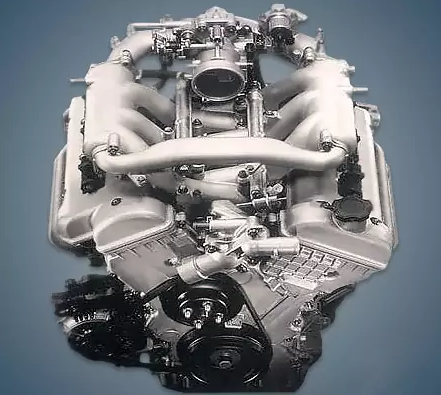
The H-series engines are the H20A, H25A, and H27A.
The H20A is similar to the Mazda KF and Toyota 1VZ-FE in many ways because it was part of a consortium of Suzuki, Toyota, and Mazda that designed a line of V6 engines with a 60° camber angle. With an aluminum block with cast-iron sleeves, two DOHC cylinder heads with hydraulic lifters, and a fairly complex timing chain drive, the design was innovative for its time. The only version of this unit had distributed fuel injection.
Specifications
| Production years | 1994-1998 |
| Displacement, cc | 1998 |
| Fuel system | distributed injection |
| Power output, hp | 136 – 145 |
| Torque output, Nm | 172 – 183 |
| Cylinder block | aluminum V6 |
| Block head | aluminum 24v |
| Cylinder bore, mm | 78 |
| Piston stroke, mm | 69.7 |
| Compression ratio | 9.5 |
| Hydraulic lifters | yes |
| Timing drive | chain |
| Turbocharging | no |
| Recommended engine oil | 5W-30, 5W-40 |
| Engine oil capacity, liter | 6.2 |
| Fuel type | petrol |
| Euro standards | EURO 2 |
| Fuel consumption, L/100 km (for Suzuki Escudo 1997) — city — highway — combined |
12.9 8.2 10.6 |
| Engine lifespan, km | ~350 000 |
The engine was installed on:
- Suzuki Escudo 1 (ET) in 1994 – 1998;
- Suzuki Vitara 1 (ET) in 1994 – 1998.
Disadvantages of the Suzuki H20A engine
Three chains and three hydraulic tensioners make up this gas distribution system, which places a high demand on the oil’s quality and, specifically, on the replacement process. Tensioner wedges, chain jumps, and motor failure are common outcomes of saving.
The oil catcher labyrinth of the valve covers, which is a component of the crankcase ventilation system, rapidly clogs for the same reason. This is the oil burner’s primary offender. The knocking of hydraulic lifters is a good indicator of serious grease contamination.
Regular oil leaks are worth mentioning separately because they are a true catastrophe in this area. The engine’s front cover, the front-rear crankshaft oil seals, and the oil channel sealing rings where the block and crankcase meet the sump are the weak points.
Additionally, the EGR valve clogs up quickly or its supply pipe cracks, and the mass air flow and throttle position sensors frequently malfunction here.