
The second and third generations of the Cultus models that were well-liked in the local market were equipped with the 1.3-liter 16-valve Suzuki G15A engine, which was manufactured in Japan between 1991 and 2002. After that, this power unit was shipped to developing nations, where it is currently being assembled.
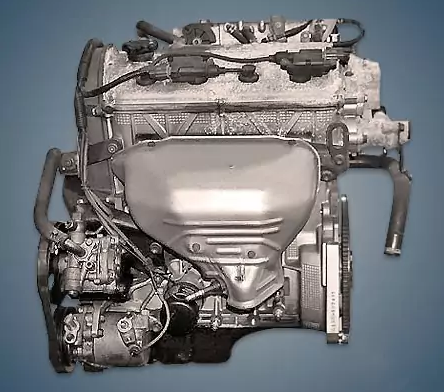
G-series engines include the G10A, G13B, G13BA, G13BB, G15A, G16A, and G16B.
Specifications
| Production years | 1991-2002 |
| Displacement, cc | 1493 |
| Fuel system | distributed injection |
| Power output, hp | 91 – 97 |
| Torque output, Nm | 123 – 129 |
| Cylinder block | aluminum R4 |
| Block head | aluminum 16v |
| Cylinder bore, mm | 75 |
| Piston stroke, mm | 84.5 |
| Compression ratio | 10.0 |
| Features | SOHC |
| Hydraulic lifters | no |
| Timing drive | belt |
| Phase regulator | no |
| Turbocharging | no |
| Recommended engine oil | 5W-30 |
| Engine oil capacity, liter | 3.3 |
| Fuel type | petrol |
| Euro standards | EURO 2/3 |
| Fuel consumption, L/100 km (for Suzuki Cultus 1997) — city — highway — combined |
6.8 4.7 5.4 |
| Engine lifespan, km | ~320 000 |
| Weight, kg | 87 (without attachments) |
The engine was installed on:
- Suzuki Cultus 2 (SF) in 1991 – 1995; Cultus 3 (SY) in 1995 – 2002.
Disadvantages of the Suzuki G15A engine
Although this motor is straightforward and dependable, its aluminum block and cylinder head are prone to overheating;
Regular overheating causes the cooling jacket to crack very quickly;
It’s fortunate that the valves do not bend here because the timing belt frequently bursts before the regulations;
There are no hydraulic lifters here, and the valve clearances must be adjusted every 30,000 kilometers. After 150,000 kilometers, the valve stem seals wear out and lubricant consumption becomes apparent.