
From 2000 to 2014, the 1.5-liter Suzuki M15A gasoline engine was manufactured in Japan and fitted to well-known models like the Liana, Swift, Ignis, and its Subaru Justy clone. This motor is still being modified for the Indonesian version of the SX4 crossover.
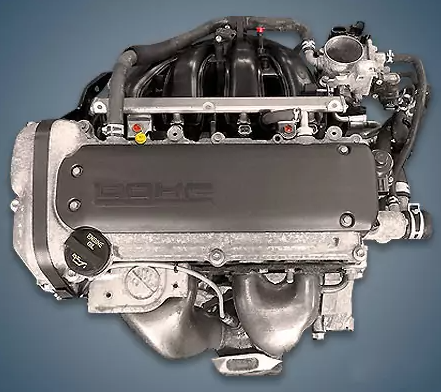
M-series engines: M13A, M15A, M16A, and M18A.
The M-series gasoline powertrain lineup was expanded to include a 1.5-liter engine in 2000. It has a very straightforward design: a timing chain drive, an aluminum 16-valve cylinder head without hydraulic lifters, an aluminum cylinder block with cast-iron liners and an open cooling jacket, and an intake dephaser. Injection of fuel is only dispersed.
The engine comes in two versions: a basic one with a compression ratio of 9.5 that produces 100 horsepower and 133 Nm, and a more sophisticated, less popular version with a compression ratio of 11 that produces 111 horsepower and 142 Nm. The unit is still being assembled after being modified to produce 109 horsepower for the Indonesian market.
Specifications
| Production years | 2000-2014 |
| Displacement, cc | 1490 |
| Fuel system | distributed injection |
| Power output, hp | 99 – 111 |
| Torque output, Nm | 133 – 142 |
| Cylinder block | aluminum R4 |
| Block head | aluminum 16v |
| Cylinder bore, mm | 78 |
| Piston stroke, mm | 78 |
| Compression ratio | 9.5 – 11.0 |
| Hydraulic lifters | no |
| Timing drive | chain |
| Phase regulator | at the intake |
| Turbocharging | no |
| Recommended engine oil | 5W-30, 5W-40 |
| Engine oil capacity, liter | 4.2 |
| Fuel type | petrol |
| Euro standards | EURO 3/4 |
| Fuel consumption, L/100 km (for Suzuki Ignis 2005) — city — highway — combined |
9.8 5.8 7.2 |
| Engine lifespan, km | ~350 000 |
| Weight, kg | 92 (without attachments) |
The engine was installed on:
- Suzuki Ignis 1 (FH) in 2000 – 2006; Ignis 2 (MH) in 2003 – 2008;
- Suzuki Liana 1 (ER) in 2001 – 2007;
- Suzuki SX4 1 (GY) in 2006 – 2009;
- Suzuki Swift 3 (MZ) in 2004 – 2010;
- Subaru Justy 3 (MHY) in 2003 – 2007.
Disadvantages of the Suzuki M15A engine
The motor’s only significant issue is oil consumption at high mileage, which can be caused by worn seats or valve guides in addition to stuck rings.
This aluminum motor frequently cracks through the cylinder head gasket and cannot withstand overheating. Subsidence of the aluminum block’s sleeves exacerbates the situation after 200,000 kilometers.
The unit’s floating idle speeds are another major issue. A dirty throttle or EGR valve is typically the cause; it also clogs easily.
Owners have a lot of problems with unreliable sensors, particularly the crankshaft position sensor and the camshaft position sensor. There is a small resource that sets ignition coils apart; occasionally, they are just candles.
Additionally, the power unit’s supports move slightly, the catalyst breaks down quickly here, oil frequently leaks through the pressure sensor, and the valves need to be adjusted every 30,000 kilometers.