
From 2008 to 2020, the 1.2-liter, 16-valve Suzuki K12B engine was manufactured in Japan, initially in the standard version and since 2013 in the Dualjet version, which has two nozzles per cylinder. This device was installed on the Changan model under the JL473Q index in the Chinese market.
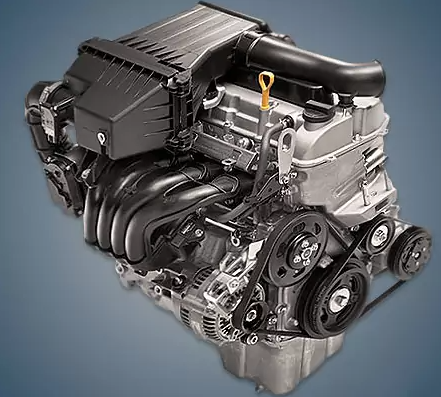
K-series engines include the K6A, K10A, K10B, K12B, K14C, K14B, and K15B.
Specifications
| Production years | 2008-2020 |
| Displacement, cc | 1242 |
| Fuel system | distributed injection |
| Power output, hp | 86 – 94 (MPI) 90 – 94 (Dualjet) |
| Torque output, Nm | 114 – 118 (MPI) 118 – 120 (Dualjet) |
| Cylinder block | aluminum R4 |
| Block head | aluminum 16v |
| Cylinder bore, mm | 73 |
| Piston stroke, mm | 74.2 |
| Compression ratio | 11.0 (MPI) 12.0 (Dualjet) |
| Features | DOHC |
| Hydraulic lifters | no |
| Timing drive | chain |
| Phase regulator | on both shafts |
| Turbocharging | no |
| Recommended engine oil | 5W-30 |
| Engine oil capacity, liter | 3.1 |
| Fuel type | petrol |
| Euro standards | EURO 4/5 |
| Fuel consumption, L/100 km (for Suzuki Swift 2015) — city — highway — combined |
6.1 4.4 5.0 |
| Engine lifespan, km | ~280 000 |
The engine was installed on:
- Suzuki Ciaz 1 (VC) in 2014 – 2020;
- Suzuki Solio 2 (MA15) in 2010 – 2015;
- Suzuki Splash 1 (EX) in 2008 – 2014;
- Suzuki Swift 4 (NZ) in 2010 – 2017;
- Opel Agila B (H08) in 2008 – 2014.
Disadvantages of the Suzuki K12B engine
This motor has a straightforward design, is dependable, and has no significant flaws.
Ignition coil failures and throttle contamination are the primary causes of breakdowns.
Phase regulator valve clogging is a common consequence of oil conservation.
Additionally, the owners bemoan the engine’s lengthy winter warm-up.
Every 100,000 kilometers, valve clearances must be changed because there are no hydraulic lifters.