
From 2006 to 2013, the company’s factory assembled the 1.6-liter Peugeot EP6 or 5FW engine, which was fitted to numerous popular concern models at the time, including the 207 and 308. A Euro 5 version of this engine, known as the EP6C, has been manufactured since 2010.
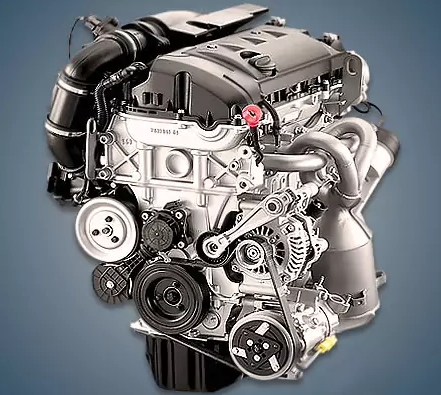
The Prince family of atmospheric engines includes the EP3, EP3C, EP6, EP6C, and EP6CB.
Engineers from BMW and PSA developed the Prince family’s 1.6-liter engine for the Peugeot 207 CC cabriolet, which made its debut in 2006. The N12B16A and the Mini both had the same engine installed. The motor’s design, which includes an aluminum cylinder block, an aluminum 16-valve cylinder head with timing chain drive and hydraulic compensators, two shafts of Vanos-type phase regulators, and a Valvetronic throttleless control system, is highly innovative for its time. An additional electric pump and an adjustable oil pump were also added to these units.
Although the lineup included direct injection turbo engines with varying forcing, this atmospheric power unit was only outfitted with distributed fuel injection.
Specifications
| Production years | 2006-2013 |
| Displacement, cc | 1598 |
| Fuel system | injector |
| Power output, hp | 120 (5FW or VTI 120) 114 (5FP or VTI 115) |
| Torque output, Nm | 160 |
| Cylinder block | aluminum R4 |
| Block head | aluminum 16v |
| Cylinder bore, mm | 77 |
| Piston stroke, mm | 85.8 |
| Compression ratio | 11.0 |
| Hydraulic lifters | yes |
| Timing drive | chain |
| Phase regulator | yes |
| Turbocharging | no |
| Recommended engine oil | 5W-30, 5W-40 |
| Engine oil capacity, liter | 4.25 |
| Fuel type | petrol |
| Euro standards | EURO 4 |
| Fuel consumption, L/100 km (for Peugeot 308 2008) — city — highway — combined |
9.3 5.2 6.7 |
| Engine lifespan, km | ~200 000 |
| Weight, kg | 117 |
The engine was installed on:
- Citroen C4 I (B51) in 2008 – 2010;
- Citroen C4 Picasso I (B58) in 2008 – 2010;
- Peugeot 207 I (A7) in 2006 – 2013;
- Peugeot 308 I (T7) in 2007 – 2011;
- Peugeot 3008 I (T84) in 2009 – 2011;
- Peugeot 5008 I (T87) in 2009 – 2011.
Disadvantages of the Peugeot EP6 engine
The most well-known issue with these units is the timing chain’s extremely limited supply; occasionally, the tensioner, damper, star, and chain itself need to be replaced by 50,000 kilometers. These days, there are plenty of alternatives available, most of which last a little longer.
Additionally, owners of vehicles with this engine frequently experience a wedge of a vacuum pump, which can result in a timing chain break with valve bending and a subsequent engine overhaul, or a breakdown of the exhaust camshaft and the gear of its drive sprocket.
Even at low runs, the oil consumption of these units is well-known. Rings, wear on crankcase ventilation membranes or valve stem seals, and carbon deposits from burned oil clogging the intake manifold and preventing the valves from closing are typically the causes.
Failures of the Vanos phase regulators and the Valvetronic system, the breakdown and frequent falling out of valve seats, frequent lubricant and antifreeze leaks, and the fact that parts like a thermostat, water pump, and lambda probe are essentially consumables all cause a lot of problems.