
Produced between 2000 and 2006, the 2.2-liter Peugeot DW12TED4 or DW12ATED4 engine was fitted to the company’s largest models, including the 406 and 607. Three engine versions were available: 4HW for minivans 807 and C8, and 4HX and 4HZ for passenger cars.
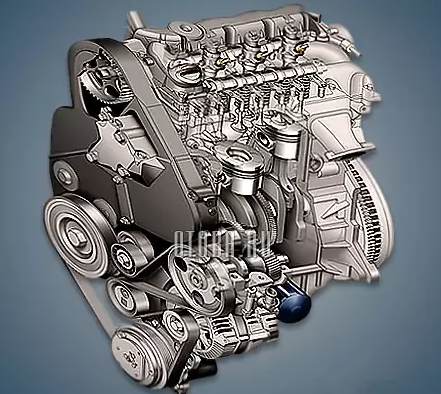
DW12TED4, DW12BTED4, DW12CTED4, DW12MTED4, and DW12UTED are all part of the DW12 line.
2000 saw the introduction of 2.2-liter diesel units on the Peugeot 607 model. A common rail fuel system made by Bosch EDC 15C2 or Siemens SID 801, a balancer shaft block, an aluminum 16-valve cylinder head with hydraulic lifters, a combined timing drive in the form of a belt and a small chain between the camshafts, and a Garrett GT1549P variable geometry turbine with intercooler are all part of the design.
The SWIRL system, which modifies the turbulence of the air flow in the intake, is one of the engine’s features. The air flows from the two intake manifolds are actually mixed, which increases vortex formation and aids in the full combustion of diesel fuel.
The engine was mounted on:
- Citroen C5 I (X3/X4) in 2001 – 2005;
- Peugeot C8 I (V3) in 2002 – 2006;
- Peugeot 406 I (D8/D9) in 2001 – 2005;
- Peugeot 607 I (Z8/Z9) in 2000 – 2005;
- Peugeot 807 I (V2) in 2002 – 2006;
- Fiat Ulysse II (179) in 2002 – 2006;
- Lancia Phedra I (179) in 2002 – 2006.
Specifications
| Production years | 2000-2006 |
| Displacement, cc | 2179 |
| Fuel system | Common Rail |
| Power output, hp | 128 – 133 |
| Torque output, Nm | 315 |
| Cylinder block | cast iron R4 |
| Block head | aluminum 16v |
| Cylinder bore, mm | 85 |
| Piston stroke, mm | 96 |
| Compression ratio | 18.0 |
| Hydraulic lifters | yes |
| Timing drive | chain & belt |
| Phase regulator | no |
| Turbocharging | Garrett GT1549P |
| Recommended engine oil | 5W-40, 5W-30 |
| Engine oil capacity, liter | 5.25 |
| Fuel type | diesel |
| Euro standards | EURO 3/4 |
| Fuel consumption, L/100 km (for Peugeot 607 2003) — city — highway — combined |
8.9 5.5 6.7 |
| Engine lifespan, km | ~400 000 |
| Weight, kg | 215 |
Disadvantages of the DW12TED4 engine
This is where the chain between the camshafts was frequently pulled during the first two years of production. The camshaft stars can still turn even after the quality improved.
Here, the rubber diaphragm that controls the intake geometry change system (SWIRL) wears out rather quickly, causing the intake manifold’s vacuum to vanish and the turbine to enter maximum performance mode and begin to blow.
The most well-known issue with 2.2 HDi diesel engines is the nozzles that become sour in the cylinder head.These nozzles can adhere to the cylinder head so tightly that service stations typically use hydraulics, which frequently break both the nozzles and the engine cylinder head.
Fuel pressure regulator failures are frequently caused by burnout of refractory washers beneath the nozzles, leaks along the Bosch injection pump seals, and clogged filters. Additionally, the Siemens Common Rail system is well-known for airing rather frequently.
The crankshaft damper pulley, turbine geometry, and particularly the particulate filter—of course in those versions that have it—are modest resources in this power unit. Additionally, heat exchangers frequently pass through this area, and soot quickly clogs the EGR valve.