
The first generation Megane, Scenic, and Laguna were all equipped with the 1.8-liter 16-valve Renault F4P engine, which was manufactured at the Cleon Plant between 1998 and 2005. Additionally, the Proton Waja model, which is well-known in Malaysia, has this power unit under the hood.
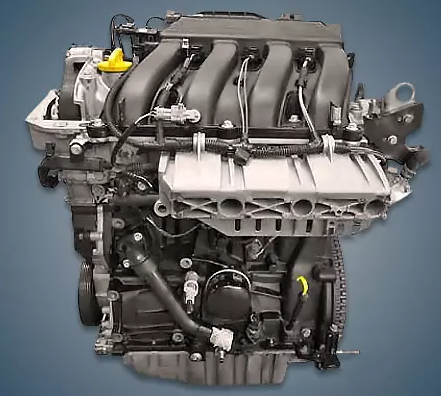
F3P, F4P, F7P, F2R, F3R, F4R, F4Rt, F5R, and F7R are all part of the F-series.
In 1998, the redesigned Laguna debuted the first 16-valve F-series power unit. With hydraulic lifters, a split coil ignition system, and a phase shifter on the intake camshaft, this 1.8-liter engine was different from its 8-valve counterparts of the new DOHC cylinder head. Its predecessor was the source of the in-line 4-cylinder cast-iron block and timing belt drive.
In contrast to other brothers in the series, this unit only underwent two modifications: one for the first generation’s Megane and Scenic, and another that is marginally more potent for the first and second Laguna. The well-known Malaysian model Proton Waya had this motor installed for a while. This engine was put together at the French company’s main engine plant in Cleon.
The engine was mounted on:
- Renault Laguna 1 (X56) in 1998 – 2001; Laguna 2 (X74) in 2001 – 2005;
- Renault Megane 1 (X64) in 2001 – 2003;
- Renault Scenic 1 (J64) in 2001 – 2003;
- Proton Waja 1 in 2002 – 2003.
Specifications
| Production years | 1998-2005 |
| Displacement, cc | 1783 |
| Fuel system | injector |
| Power output, hp | 115 – 120 |
| Torque output, Nm | 158 – 170 |
| Cylinder block | cast iron R4 |
| Block head | aluminum 16v |
| Cylinder bore, mm | 82.7 |
| Piston stroke, mm | 83 |
| Compression ratio | 9.8 |
| Hydraulic lifters | yes |
| Timing drive | belt |
| Phase regulator | yes |
| Turbocharging | no |
| Recommended engine oil | 5W-30, 5W-40 |
| Engine oil capacity, liter | 5.5 |
| Fuel type | petrol |
| Euro standards | EURO 2/3 |
| Fuel consumption, L/100 km (for Renault Laguna 2002) — city — highway — combined |
10.1 6.1 7.5 |
| Engine lifespan, km | ~350 000 |
| Weight, kg | 145 |
Disadvantages of the Renault F4P engine
Iron motors are renowned for their frequent electrical malfunctions. Here, poor wiring causes a lot of problems in addition to sensors and ignition coils.
The phase shifter on the intake camshaft is another engine weakness. Even before 100,000 kilometers, it can break and begin to crack, and replacing it is expensive.
The cause of unstable engine operation is the subject of numerous pages on specialized forums. Usually, it helps to remove suction in the intake or clean the throttle and nozzles.
Oil leaks cause this unit to continuously lose oil; typically, grease seeps through the dephaser valve, under the valve cover, or through the camshaft or crankshaft oil seals.
Lambda probes and their pillows identify a low resource in this motor.