
From 2006 to 2010, the 1.6-liter Opel Z16XER or LDE engine was assembled at various factories and fitted to numerous well-known concern models, including the Astra, Zafira, and Insignia. Additionally, Chevrolet vehicles with the F16D4 index had this power unit installed.
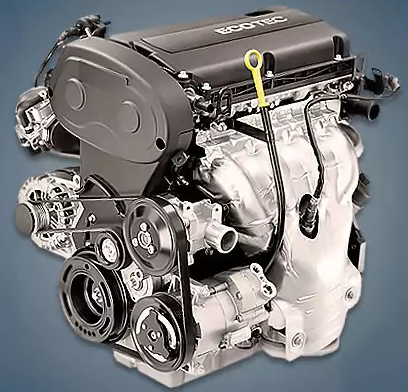
The engines Z16SE, Z16XE, Z16XEP, Z18XE, and Z18XER are also part of the Z15 family.
One of the first examples of the GM Family 1 family’s third generation of gasoline engines was a 1.6-liter engine for Opel vehicles, which debuted in 2005. With its multiport fuel injection, cast-iron cylinder block, aluminum 16-valve block head without hydraulic lifters, timing belt drive, DCVCP phase shifters on two camshafts, and VGIS intake geometry change system, this engine is quite basic.
The engine was mounted on:
- Opel Astra H (A04) in 2006 – 2010;
- Opel Insignia A (G09) in 2008 – 2010;
- Opel Zafira B (A05) in 2008 – 2010.
Specifications
| Production years | 2006-2010 |
| Displacement, cc | 1598 |
| Fuel system | distributed injection |
| Power output, hp | 115 |
| Torque output, Nm | 155 |
| Cylinder block | cast iron R4 |
| Block head | aluminum 16v |
| Cylinder bore, mm | 79 |
| Piston stroke, mm | 81.5 |
| Compression ratio | 10.8 |
| Hydraulic lifters | no |
| Timing drive | belt |
| Phase regulator | DCVCP |
| Turbocharging | no |
| Recommended engine oil | 5W-30 |
| Engine oil capacity, liter | 4.5 |
| Fuel type | petrol |
| Euro standards | EURO 4 |
| Fuel consumption, L/100 km (for Opel Astra 2008) — city — highway — combined |
8.7 5.2 6.5 |
| Engine lifespan, km | ~350 000 |
| Weight, kg | 115 |
Disadvantages of the Z16XER engine
The first power units in this line had faulty phase regulators, but they were long ago replaced under warranty. Now, the primary issues are related to solenoid valve grid contamination, which is why the units just jam.
The ever-leaking oil heat exchanger, which allows lubricant to seep into coolant and antifreeze to dilute the oil, ranks second in the owners’ complaints. This significantly shortens the life of the oil pump and all engine liners.
All of the family’s motors suffer greatly from a capricious electrician. The engine ECU frequently malfunctions, and the issue is typically with its connectors rather than the board itself; frequently, the ignition coil module or the electronically controlled thermostat malfunction.
The crankcase ventilation valve’s membrane, which frequently bursts, the motor’s perpetually leaking seals, and the lack of hydraulic compensators are additional weak points. Additionally, keep an eye on the timing belt’s condition because the valves will bend if it breaks.