
From 2005 to 2012, the company manufactured the 1.4-liter 16-valve Hyundai G4EE engine, which was fitted to well-known vehicles like the Getz, Accent, and comparable Kia Rio.
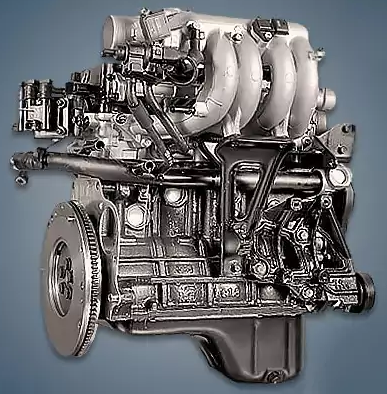
A 1.4-liter engine, essentially a scaled-down version of the 1.6-liter G4ED, was added to the Alpha line of gasoline powertrains in 2005. This engine’s design, which included distributed fuel injection, an in-line cast-iron cylinder block, an aluminum 16-valve head with hydraulic lifters, and a combined timing drive made up of a belt and a small chain between the camshafts, was typical for its era.
A version derated to 75 horsepower with the same torque of 125 Nm was available in several markets, in addition to the engine’s standard modification of 97 horsepower and 125 Nm of torque.
G4EA, G4EH, G4EE, G4EB, G4EC, G4ER, G4EK, and G4ED are members of the Alpha series.
The engine was mounted on:
- Hyundai Accent 3 (MC) in 2005 – 2012;
- Hyundai Getz 1 (TB) in 2005 – 2011;
- Kia Rio 2 (JB) in 2005 – 2011.
Specifications
| Production years | 2005-2012 |
| Displacement, cc | 1399 |
| Fuel system | distributed injection |
| Power output, hp | 75 / 97 |
| Torque output, Nm | 125 |
| Cylinder block | cast iron R4 |
| Block head | aluminum 16v |
| Cylinder bore, mm | 75.5 |
| Piston stroke, mm | 78.1 |
| Compression ratio | 10.0 |
| Hydraulic lifters | yes |
| Timing drive | chain & belt |
| Turbocharging | no |
| Recommended engine oil | 5W-30, 5W-40 |
| Engine oil capacity, liter | 3.8 |
| Fuel type | petrol |
| Euro standards | EURO 4 |
| Fuel consumption, L/100 km (for Kia Rio 2007) — city — highway — combined |
7.9 5.1 6.2 |
| Engine lifespan, km | ~350 000 |
| Weight, kg | 116 |
Disadvantages of the Hyundai G4EE engine
The owners only have minor complaints about this straightforward and dependable device, primarily about unstable engine operation brought on by contamination of the throttle, idle speed controller, or injectors. High-voltage wires or cracked ignition coils are also frequently the cause.
The timing belt should be replaced every 90,000 kilometers according to the official handbook, but this is not always the case, and when it breaks, the valves typically bend. By the second belt change, the short chain that connects the camshafts typically stretches.
When oil consumption reaches a liter per 1000 kilometers after 150,000 kilometers, it is advised to replace the valve stem seals in the cylinder head; this usually helps. Although they typically have adequate decoking, stuck oil scraper rings can occasionally be the cause.
Regular grease leaks through oil seals, short-lived engine mounts, and hydraulic lifters—which frequently knock up to 100,000 kilometers—are the subject of numerous complaints on specialized forums. Additionally, a clogged fuel filter or fuel pump may cause the engine to start poorly.