
From 1999 to 2012, the company produced the 1.5-liter 12-valve Hyundai G4EB engine, which was installed in the highly sought-after second-generation Hyundai Accent. Before being restyled, this unit was only installed on the local Accent model in the European market.
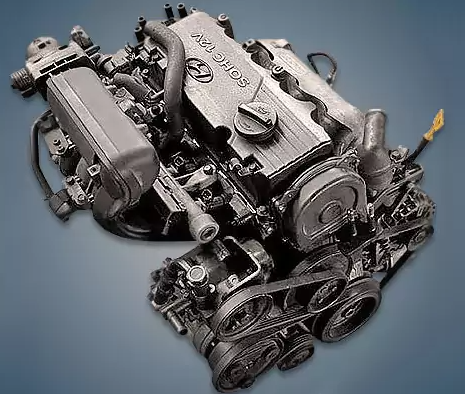
Two 1.5-liter engines, one with a 12-valve SOHC block head and the other with a 16-valve DOHC block head, made their debut on the second generation Hyundai Accent in 1999. The power unit described here had a straightforward design consisting of a timing belt drive, an aluminum 12-valve cylinder head with hydraulic lifters, and a cast-iron cylinder block. It also features a dual coil ignition system and distributed fuel injection.
G4EA, G4EH, G4EE, G4EB, G4EC, G4ER, G4EK, and G4ED are all part of the Alpha series.
The engine was mounted on:
- Hyundai Accent 2 (LC) in 1999 – 2012.
Specifications
| Production years | 1999-2012 |
| Displacement, cc | 1495 |
| Fuel system | distributed injection |
| Power output, hp | 90 |
| Torque output, Nm | 132 |
| Cylinder block | cast iron R4 |
| Block head | aluminum 12v |
| Cylinder bore, mm | 75.5 |
| Piston stroke, mm | 83.5 |
| Compression ratio | 10.0 |
| Features | SOHC |
| Hydraulic lifters | yes |
| Timing drive | belt |
| Turbocharging | no |
| Recommended engine oil | 5W-40, 10W-40 |
| Engine oil capacity, liter | 3.8 |
| Fuel type | petrol |
| Euro standards | EURO 2/3 |
| Fuel consumption, L/100 km (for Hyundai Accent 2005) — city — highway — combined |
9.4 5.6 6.9 |
| Engine lifespan, km | ~350 000 |
| Weight, kg | 106 |
Disadvantages of the Hyundai G4EB engine
This straightforward and dependable power unit typically only worries about minor issues, such as idle speed floats brought on by contamination of the throttle assembly, idle speed controller, or injectors. The ignition coil cracks and high-voltage wires frequently break.
The Alpha family of engines is not renowned for having the best hydraulic lifters; after 80–100,000 kilometers, they frequently break down and begin to knock violently. Wear on the oil pump plunger is blamed in specialized forums for the decrease in lubricant pressure.
The timing belt in this engine is supposed to change every 50,000 kilometers per TagAZ plant regulations, but there have been reports of it bursting even earlier. Additionally, the valves are always bent. It is highly desirable to replace the water pump in addition to the belt, but its resources are also limited.
A small amount of lubricant consumption frequently occurs on runs longer than 200,000 kilometers, and this is typically caused by hardened valve stem seals that require replacement. The oil scraper rings have already fallen when the oil burner is more than one liter per 1000 kilometers.
Additionally, short-lived engine mounts, an unreliable starter, frequent lubricant leaks, and the appearance of a check engine due to a burned muffler corrugation are all frequently criticized by owners. Additionally, check the emergency fuel shutoff mechanism if the engine is not starting.