
Only manufactured since 2017, the Hyundai-Kia G4KL 2.0-liter turbo engine, also known as the 2.0 T-GDi, powers well-known models like the Kia Stinger and the comparable Genesis G70. In essence, this unit is a rear-wheel drive version of the G4KH turbo engine.
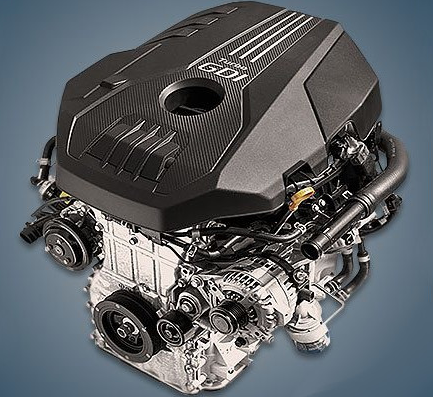
Theta 2.0L family: G4KA, G4KD, G4KF, G4KH, G4KL.
The engine was mounted on:
- Genesis G70 1 (IK) since 2017;
- Kia Stinger 1 (CK) since 2017.
Specifications
| Production years | since 2017 |
| Displacement, cc | 1998 |
| Fuel system | direct injection |
| Power output, hp | 250 – 255 |
| Torque output, Nm | 353 |
| Cylinder block | aluminum R4 |
| Block head | aluminum 16v |
| Cylinder bore, mm | 86 |
| Piston stroke, mm | 86 |
| Compression ratio | 10.0 |
| Features | no |
| Hydraulic lifters | no |
| Timing drive | chain |
| Phase regulator | Dual CVVT |
| Turbocharging | Garrett NGT2056KSZM |
| Recommended engine oil | 5W-30 |
| Engine oil capacity, liter | 5.7 |
| Fuel type | petrol |
| Euro standards | EURO 5/6 |
| Fuel consumption, L/100 km (for Kia Stinger 2018) — city — highway — combined |
12.7 7.2 9.2 |
| Engine lifespan, km | ~220 000 |
| Weight, kg | 135.3 |
Disadvantages of the Hyundai G4KL engine
The high pressure fuel pump failure has been the subject of the majority of complaints on the specialized forums thus far.
Additionally, this pump is typically to blame if your engine oil level suddenly rises.
It has carbon buildup on the intake valves, just like any direct injection unit.
The valve clearance needs to be changed every 100,000 kilometers, and there are no hydraulic lifters.