
From 1989 to 1997, the company’s Japanese plant assembled the 2.0-liter Mazda FE3N engine, which was then installed in the local Capella sedan or GD and station wagon or GV models. A turbo modification with an FE3T index of 260 horsepower is available for Mazda sports cars.
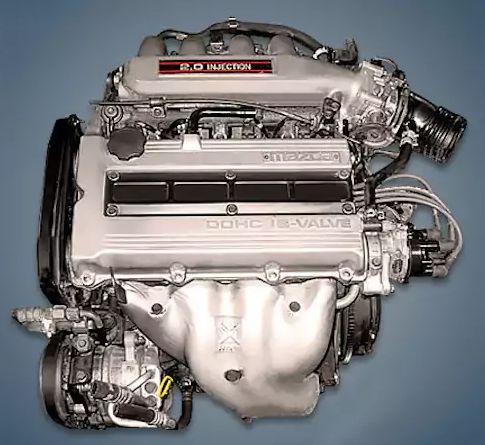
F6, FP, FP-DE, F8, FE, FE-DE, FE3N, FS, FS-DE, FS-ZE, and F2 are all members of the F-engine family.
The engine was mounted on:
- Mazda Capella GD in 1989 – 1991;
- Mazda Capella GV in 1989 – 1997.
Specifications
| Production years | 1989-1997 |
| Displacement, cc | 1998 |
| Fuel system | injector |
| Power output, hp | 150 – 170 |
| Torque output, Nm | 180 – 190 |
| Cylinder block | cast iron R4 |
| Block head | aluminum 16v |
| Cylinder bore, mm | 86 |
| Piston stroke, mm | 86 |
| Compression ratio | 9.5 – 10.2 |
| Features | DOHC, VRIS |
| Hydraulic lifters | yes |
| Timing drive | belt |
| Phase regulator | no |
| Turbocharging | no |
| Recommended engine oil | 5W-30 |
| Engine oil capacity, liter | 3.9 |
| Fuel type | petrol |
| Euro standards | EURO 2 |
| Fuel consumption, L/100 km (for Mazda Capella Wagon 1996) — city — highway — combined |
12.3 7.9 9.4 |
| Engine lifespan, km | ~250 000 |
| Weight, kg | 168.7 |
Disadvantages of the Mazda FE3N engine
The engine is dependable and has a good resource despite the high degree of forcing;
Hydraulic lifters are terrified of subpar oil, and the aluminum head is terrified of overheating;
Oil scraper rings frequently lie and lubricant consumption shows up after 200,000 kilometers; the timing belt is made for 60,000 kilometers, and when it breaks with sports pistons, the valves will bend; minor engine issues include oil leaks and ignition system fluctuations.