
Produced between 1995 and 2000, the 1.8-liter Ford RTK/RTJ or 1.8 Endura DE engine was fitted to the pre-facelift fourth generation of the well-liked Fiesta model. Although this diesel engine is not very dependable, its straightforward design makes it repairable.
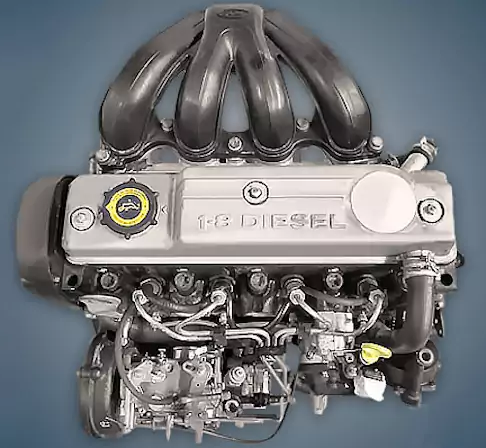
The RVA, RFA, and RFN internal combustion engines are also part of the Endura-DE line.
The engine was installed on:
- Ford Fiesta Mk4 in 1995 – 2000.
Specifications
| Production years | 1995-2000 |
| Displacement, cc | 1753 |
| Fuel system | prechambers |
| Power output, hp | 60 |
| Torque output, Nm | 105 |
| Cylinder block | cast iron R4 |
| Block head | cast iron 8v |
| Cylinder bore, mm | 82.5 |
| Piston stroke, mm | 82 |
| Compression ratio | 21.5 |
| Features | no |
| Hydraulic lifters | no |
| Timing drive | belt |
| Phase regulator | no |
| Turbocharging | no |
| Recommended engine oil | 5W-40 |
| Engine oil capacity, liter | 5.0 |
| Fuel type | diesel |
| Euro standards | EURO 1 |
| Fuel consumption, L/100 km (for Ford Fiesta 1998) — city — highway — combined |
7.9 5.0 6.1 |
| Engine lifespan, km | ~240 000 |
Disadvantages of the Ford RTK/RTJ engine
This diesel engine is extremely challenging to operate in cold weather, and occasionally it just won’t start;
Due to inadequate cooling, there is a chance that the fourth cylinder’s valves and rings will burn out; the motor typically fails after the timing belt, which has a resource of less than 50,000 kilometers;
This engine has leaks, particularly where the upper and lower portions of the block meet;
Lack of lubrication frequently causes the crankshaft to break or the liners to rotate.