
The 2.2L Duratorq-TDCi is an in-line, four-cylinder, turbocharged diesel engine with two camshafts, sixteen valves, an exhaust gas recirculation (EGR) system, and a balancer shaft block for maximum smoothness.
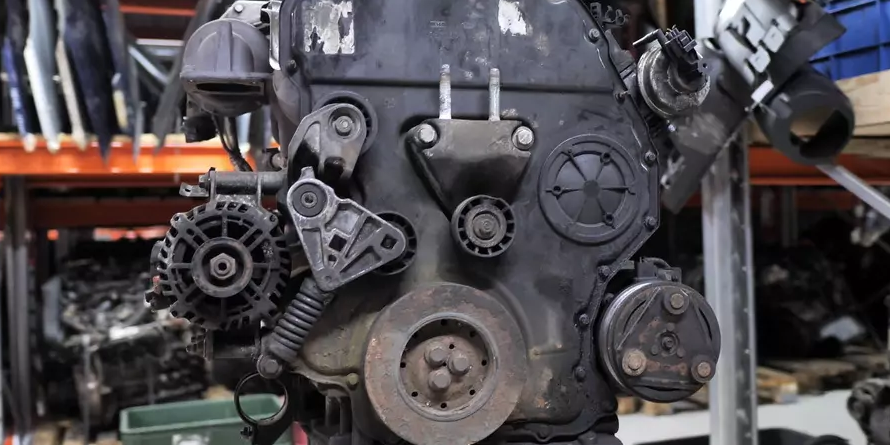
Cast iron is used to make the cylinder block, which has double walls for maximum strength and cast cylinder liners. Additionally, an air jacket that greatly enhances sound insulation has been developed. The cylinder block is directly bored with the cylinder mirrors. Two guide bushing holes are made in the cylinder block to secure the head gasket.
Two components make up the composite, aluminum cylinder head. Ten bolts secure the lower portion of the cylinder head to the cylinder block. Bolts have a programmed tightening deformation, so reusing them is prohibited.
Specifications
| Manufacturer | Ford |
| Also called | Duratorq 2.2 |
| Fuel system | direct injection |
| Configuration | inline |
| Number of cylinders | 4 |
| Piston stroke, mm | 94,6 |
| Cylinder bore, mm | 86 |
| Compression ratio | 17.5 |
| Displacement, cc | 2198 |
| Power output, hp | 85 – 130 / 3500 |
| Torque output, Nm / rpm | 250/1500-2200 – 310/1100 |
| Fuel type | diesel |
| Euro standards | Euro 4 |
| Firing order | 1-3-4-2 |
| Engine lifespan, thousand km — official information |
300 |
Duratorq 2.2 Engine Diagram
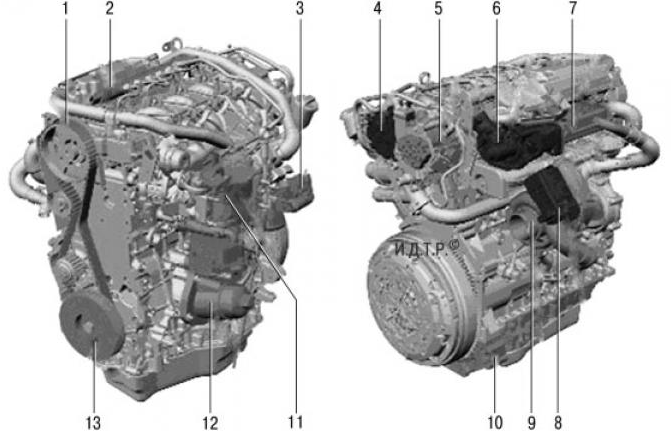
- Timing belt;
- Fuel injection manifold;
- Electronically controlled intake manifold flap;
- Vacuum pump;
- Fuel pump;
- Electrically controlled exhaust gas recirculation (EGR) system;
- EGR cooler;
- Turbocharger guide vane adjuster;
- Variable nozzle turbocharger;
- oil sump extension;
- Fuel filter;
- Oil filter / oil cooler unit;
- Crankshaft damper.
16-valve TDCi units with sophisticated Common Rail fuel delivery and a common fuel rail are among the Duratorq engines. These engines contribute to the Ford Transit’s outstanding payload of 1.4 tonnes by producing respectable torque over almost the whole operating range. The family’s motors stand out for their smooth, quiet operation and low levels of noise and vibration. Diesel engines were manufactured using the traditional design, which consists of an aluminum head and a cast iron cylinder block. Each cylinder has four valves. Additionally, Ford engineers later enhanced the ventilation system to rule out potential engine overheating.
The Duratorq 2.2 has a high pressure manifold installed on the intake and is built with cutting-edge technology. Every environmental requirement is satisfied by the power unit. In order to satisfy Duratorq diesel requirements above the Euro-4 standard, a unique particulate filter was installed in 2008. Ford has been able to achieve near-perfect developments thanks to a creative approach to powertrain design. The Duratorq 2.2 motor requires a lot of resources in addition to being affordable, adaptable, and smooth to operate.
Unofficial data indicates that diesel engines have a 300 thousand kilometer lifespan. This is not addressed by the manufacturer itself. Operating Ford Transit demonstrates that 300,000 kilometers is a sort of minimum when it comes to driving a van. Before the first significant repair, the car with a 2.2L EcoBoost gasoline engine can travel 350 thousand kilometers.