
The 1.6-liter Nissan QG16DE engine, also known as QG16 for short, was manufactured between 2000 and 2013 and was fitted to a number of the company’s well-known models, primarily in the version intended for developing nations.
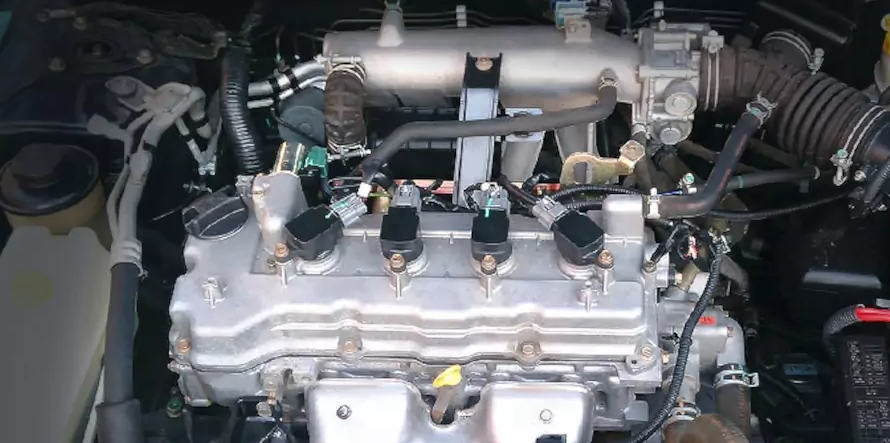
Each cylinder of the two-camshaft, 79 kW QG16DE engine has four valves. A chain powers the engine camshafts. The QG16DE engine’s cylinder block is a single casting that houses the cylinders, a cooling jacket, the upper portion of the crankcase, and five crankshaft bearings shaped like crankcase baffles. Cylinders are bored straight into the block body, which is composed of a unique type of ductile iron. Because the engine’s main bearing caps are machined using blocks, they cannot be swapped out.
The QG13DE, QG15DE, QG18DE, and QG18DD internal combustion engines are also members of the QG family.
The engine was installed on:
- Nissan Almera 2 (N16) in 2000 – 2006;
- Nissan Almera Classic (B10) in 2006 – 2012;
- Nissan Bluebird Sylphy N16 in 2000 – 2006;
- Nissan Primera 3 (P12) in 2001 – 2008;
- Nissan Sentra 5 (B15) in 2000 – 2006;
- Nissan Sunny Neo N16 in 2000 – 2005;
- Renault Scala in 2002 – 2013;
- Samsung SM3 2 (L38) in 2002 – 2013.
Specifications
| Production years | 2000-2013 |
| Displacement, cc | 1597 |
| Fuel system | distributed injection |
| Power output, hp | 100 – 120 |
| Torque output, Nm | 145 – 165 |
| Cylinder block | cast iron R4 |
| Block head | aluminum 16v |
| Cylinder bore, mm | 76 |
| Piston stroke, mm | 88 |
| Compression ratio | 9.5 – 9.8 |
| Features | EGR |
| Hydraulic lifters | no |
| Timing drive | chain |
| Phase regulator | at the N-VCT inlet |
| Turbocharging | no |
| Recommended engine oil | 5W-30 |
| Engine oil capacity, liter | 2.7 |
| Fuel type | petrol |
| Euro standards | EURO 3/4 |
| Fuel consumption, L/100 km (for Nissan Almera Classic 2008) — city — highway — combined |
9.2 5.3 6.8 |
| Engine lifespan, km | ~250 000 |
| Weight, kg | 135 |
Disadvantages of the QG16DE engine
Traction dips are caused by the timing chain’s stretching, which lasts for roughly 150,000 kilometers;
Engine speed typically floats as a result of throttle or EGR valve contamination;
The only thing that helps a relatively small resource with a generator belt is a replacement;
The valves here need to be adjusted on a regular basis because there are no hydraulic lifters;
Cases where the catalyst was destroyed and its crumbs were drawn into the cylinders are described.