
Based on the QG16DE, the QG15DE engine, also known as QG15, was created to replace the GA15DE. The cylinders’ diameter has been lowered by the manufacturer. The engine also made use of additional pistons. The compression ratio of the engine is high. Nonetheless, the engine is essentially a replica of the QG16DE that served as its foundation.
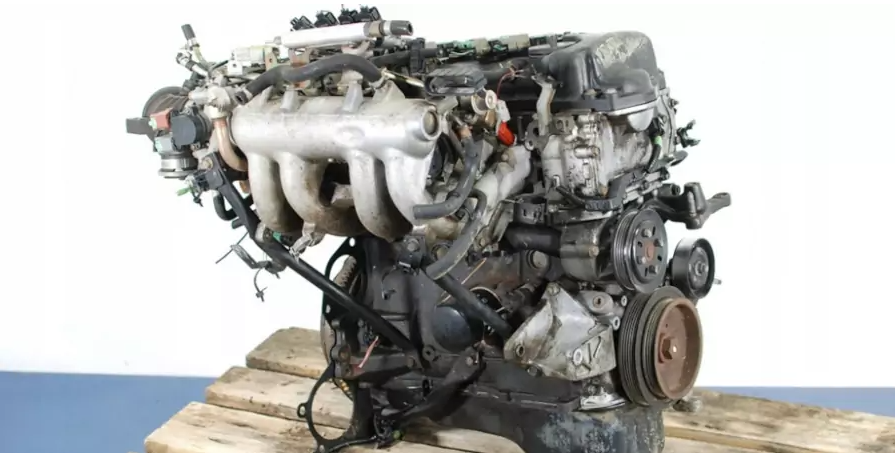
The engine was equipped with an EGR system and a mechanical throttle to lessen exhaust toxicity. With this strategy, we were able to somewhat lessen the harm that car exhaust causes to the environment.
A phase regulator was added to the intake of this power unit in 2002.
Internal combustion engines QG13DE, QG16DE, QG18DE, and QG18DD are also members of the QG family.
The engine was mounted on:
- Nissan Almera 2 (N16) in 2000 – 2006;
- Nissan Bluebird Sylphy G10 in 2000 – 2012;
- Nissan Sunny N16 in 2000 – 2005;
- Nissan Wingroad 2 (Y11) in 1999 – 2005;
- Samsung SM3 2 (L38) in 2002 – 2013.
Specifications
| Production years | 1999-20013 |
| Displacement, cc | 1497 |
| Fuel system | distributed injection |
| Power output, hp | 90 – 98 (version without phase regulator) 105 – 110 (version with phase regulator) |
| Torque output, Nm | 128 – 135 (version without phase regulator) 140 – 145 (version with phase regulator) |
| Cylinder block | cast iron R4 |
| Block head | aluminum 16v |
| Cylinder bore, mm | 73.6 |
| Piston stroke, mm | 88 |
| Compression ratio | 9.9 (version without phase regulator) 10 (version with phase regulator) |
| Features | EGR |
| Hydraulic lifters | no |
| Timing drive | chain |
| Phase regulator | no (version without phase regulator) at the N-VCT inlet (version with phase regulator) |
| Turbocharging | no |
| Recommended engine oil | 5W-30 |
| Engine oil capacity, liter | 2.7 |
| Fuel type | petrol |
| Euro standards | EURO 3 (version without phase regulator) EURO 4 (version with phase regulator) |
| Fuel consumption, L/100 km (for Nissan Almera 2005) — city — highway — combined |
8.6 5.5 6.6 |
| Engine lifespan, km | ~220 000 |
| Weight, kg | 130 |
Disadvantages of the QG15DE engine
Throttle contamination frequently causes drivers to experience floating speed; misadjusted valves are typically the cause of loud noises or knocks under the hood;
Crumbs of burned catalyst enter the cylinders during valve overlap; twitching at low speeds vanishes after flashing the control unit; and the timing chain has a limited resource, extending to a run of 120–150 thousand kilometers.
During operation, the engine is distinguished by the occurrence of unnecessary noise and whistling. The owner of a car with a QG15DE engine may also find it difficult to deal with significantly higher fuel consumption. Additionally, when operating at low speeds, the engine may twitch. Since this is a QG15DE engine specific issue rather than a malfunction, there is no need to try to solve it. However, you can fix the problem by flashing if it is really bothersome.
There aren’t many tuning options available for the QG15DE engine at first. Additionally, experts advise that buying and installing the QG18DE engine in place of the QG15DE would be a sensible choice.