
The Ford Ranger truck sold in international markets already has the new Ford diesel engine in North America (3.2 Duratorq TDCi 200). In North America, the new Power Stroke Diesel will be the only diesel engine with five cylinders.
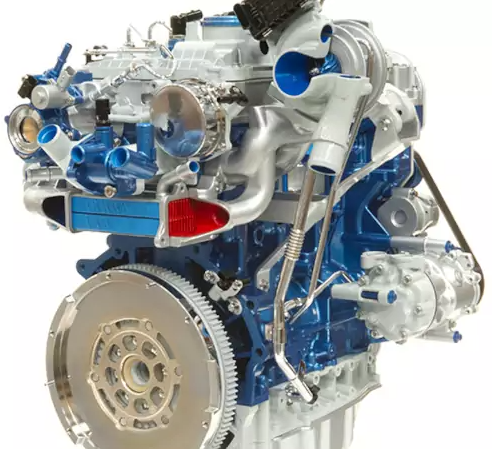
The new diesel engine in Europe is rated at 197 horsepower and 470 Nm of torque, but the North American power rating has not yet been certified.
The Common Rail fuel system feeds the 3.2-liter turbodiesel’s piezoelectric fuel injectors, which have a maximum fuel pressure of 1800 bar (26,100 psi).
In order to minimize solid diesel combustion noise and achieve lower noise levels more akin to those of a gasoline engine, precise injection timing and calibration also guarantee a smooth combustion process. Up to five injections can be produced per combustion cycle by each nozzle, which has eight spray holes. The main injection is used to produce electricity, while the pilot injection regulates the noise level.
Specifications
| Manufacturer | Ford |
| Also called | Duratorq 3.2 |
| Cylinder block alloy | cast iron |
| Fuel system | direct injection |
| Configuration | inline |
| Number of cylinders | 5 |
| Piston stroke, mm | 94,6 |
| Cylinder bore, mm | 100,76 |
| Compression ratio | 15.8 |
| Displacement, cc | 3198 |
| Power output, hp | 200 / 3500 |
| Torque output, Nm / rpm | 470 / 2000-2500 |
| Fuel type | diesel |
| Euro standards | Euro 5 |
| Firing order | 1-2-4-5-3 |
| Engine lifespan, thousand km — official information |
350 |
Features of the new Power Stroke 3.2:
The American Transit made its debut with the 3.2-liter Power Stroke, a five-cylinder engine, in the 2015 model year. The engine is a 3.2L Ford Duratorq diesel engine that has been modified to meet US emissions regulations.
Strong, stiff cast iron cylinder block; quick start glow plugs that offer smooth starts down to -25 °F (-4 °C);
Advanced piezoelectric common rail fuel injectors that deliver multiple injections per stroke to enhance performance and lower NVH; aluminum cylinder heads with double overhead cams and four valves per cylinder;
Electronically controlled turbocharger with a variable nozzle; maximum impeller speed of 197 800 rpm;
Selective catalytic reduction was used for the first time to lower NOx emissions in a Ford van; it integrated a diesel oxidation catalyst and diesel particulate filter to save space and is anticipated to work with B20 biodiesel.
In order to keep the piston crowns cool under harsh operating conditions, the engine is also fitted with low friction coated cast aluminum pistons and piston cooling nozzles that inject oil from the underside of the pistons. A highly effective water-cooled EGR valve that is more resilient to drops in coolant pressure is also included.