
The seventh generation of Ford Transit minibuses featured the 2.4-liter Ford Duratorq 2.4 engine, which was manufactured between 2006 and 2014. This diesel engine, which has a 100–140 horsepower capacity, is a member of the Common Rail motor family.
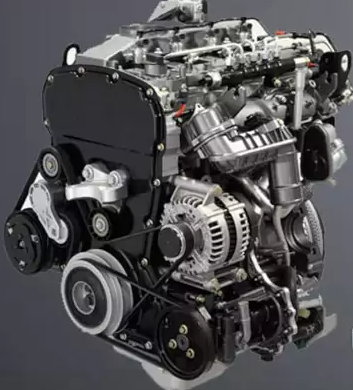
Modern technology and a high pressure manifold installed on the intake are features of the Duratorq 2.4. Every environmental requirement is satisfied by the power unit. Ford’s advancements are almost flawless thanks to a creative approach to engine design. The Duratorq 2.4 motor is resource-intensive in addition to being affordable, adaptable, and smooth to operate.
Specifications
| Manufacturer | Ford |
| Also called | Duratorq 2.4 |
| Production years | 2006 |
| Fuel system | direct injection |
| Configuration | inline |
| Number of cylinders | 4 |
| Piston stroke, mm | 94,6 |
| Cylinder bore, mm | 89,9 |
| Compression ratio | 17.5 |
| Displacement, cc | 2402 |
| Power output, hp | 100 — 140 / 3500 |
| Torque output, Nm / rpm | 285/2200 — 310/2000 |
| Fuel type | diesel |
| Euro standards | Euro 4 |
| Firing order | 1-3-4-2 |
| Engine lifespan, thousand km — official information |
350 |
Duratorq 2.4 Engine Diagram
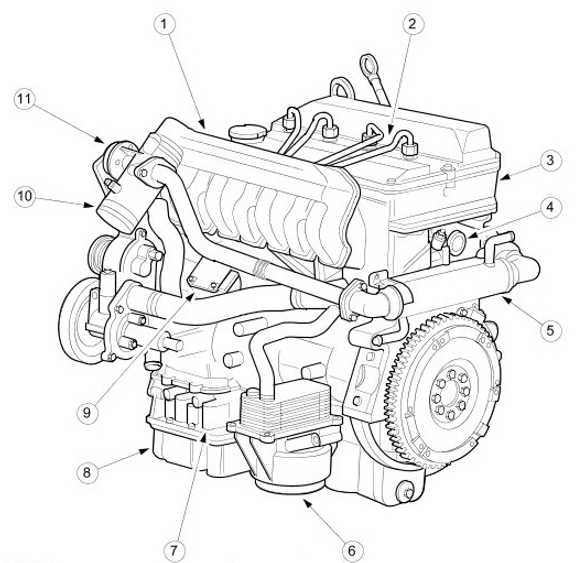
- Intake manifold;
- Cylinder head cover;
- Camshaft housing;
- Cylinder head;
- Water-cooled Exhaust Gas Recirculation (EGR) Heat Exchanger;
- Oil cooler / oil filter;
- Reinforcement frame;
- Oil sump;
- Fully electronic high pressure fuel pump;
- EGR connector (if equipped);
- EGR valve.
Quality and durability
Unofficial data indicates that diesel engines have a lifespan of 350 thousand kilometers. This is not addressed by the manufacturer itself. Operating Ford Transit demonstrates that 350 thousand kilometers is a sort of minimum when it comes to driving a van.