
From 1992 to 1997, the company produced the 2.6-liter gasoline V6 engine of the Audi ABC, which was fitted to popular concern models like the 80, 100, A4, and A6 C4. This power unit has a derated version with its own ACZ index.
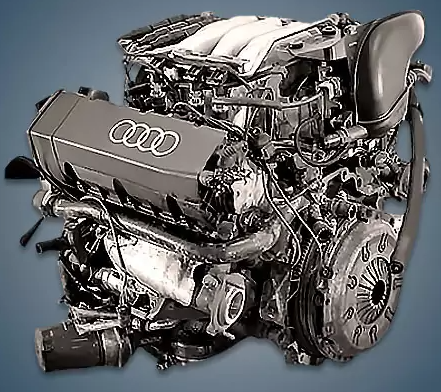
The EA835 series includes: ABC, AAH, ALF, BDV, ARE, ACK, ALG, BBJ, ASN.
Audi created a series of V-shaped 6-cylinder vehicles in the early 1990s, and because they were based on V8 engines, they have a 90° camber angle. Two years after the 2.8-liter AAN engine debuted in 1990, the ABC engine under discussion was introduced. The structure consists of a cast-iron cylinder block with two SOHC cylinder heads, hydraulic lifters, traditional distributed fuel injection, and a timing belt drive that also turns the pump.
Additionally, there is an intake manifold with a geometry change system, an ignition coil with three dual modules, an absolute pressure sensor and air temperature sensor in place of a flow meter, and just two lambda probes.
Specifications
| Production years | 1992-1997 |
| Displacement, cc | 2598 |
| Fuel system | distributed injection |
| Power output, hp | 150 |
| Torque output, Nm | 225 |
| Cylinder block | cast iron V6 |
| Block head | aluminum 12v |
| Cylinder bore, mm | 82.5 |
| Piston stroke, mm | 81 |
| Compression ratio | 10.0 |
| Features | 2 x SOHC |
| Hydraulic lifters | yes |
| Timing drive | belt |
| Turbocharging | no |
| Recommended engine oil | 5W-30, 5W-40 |
| Engine oil capacity, liter | 5.0 |
| Fuel type | petrol |
| Euro standards | EURO 2 |
| Fuel consumption, L/100 km (for Audi A6 C4 1995) — city — highway — combined |
12.5 7.0 8.6 |
| Engine lifespan, km | ~400 000 |
| Weight, kg | 160 |
The engine was installed on:
- Audi 80 B4 (8C) in 1992 – 1995;
- Audi 100 C4 (4A) in 1992 – 1994;
- Audi A4 B5 (8D) in 1994 – 1997;
- Audi A6 C4 (4A) in 1994 – 1997.
Disadvantages of the Audi ABC engine
Progressive oil consumption is the subject of the majority of complaints on specialized forums. After the oil scraper rings and caps wear down, consumption seems to be closer to 200,000 kilometers. However, the thin walls make sharpening the cylinders difficult if replacing them is ineffective.
The timing belt is supposed to change every 90,000 kilometers, but if it bursts before then, bending of the valves cannot be prevented. The most common causes are either a jammed water pump, which is powered by the same belt, or the use of non-original spare parts.
Owners frequently deal with their power unit’s erratic operation. The primary causes of this are air leaks through the intake or pipes, as well as serious contamination of the idle speed controller or throttle assembly potentiometer failure.
Additionally, lubricant frequently leaks through the heat exchanger, flowing nozzles, valve covers, and the exhaust manifold’s mating surface curvature. Check the ECU firmware and fuel pressure regulator filter for unclear starts.