
From 1990 to 1997, the company produced the 2.8-liter Audi AAH 2.8 V6 gasoline engine, which was fitted to the company’s most well-liked models, including the 80, 100, A4, A6, and A8. In certain markets, this power unit was referred to by an entirely different AFC index.
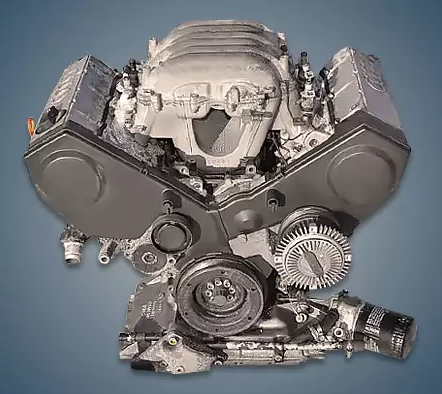
The EA835 series includes: ABC, AAH, ALF, BDV, ARE, ACK, ALG, BBJ, ASN.
Specifications
| Production years | 1990-1997 |
| Displacement, cc | 2771 |
| Fuel system | injector |
| Power output, hp | 174 |
| Torque output, Nm | 245 |
| Cylinder block | cast iron V6 |
| Block head | aluminum 12v |
| Cylinder bore, mm | 82.5 |
| Piston stroke, mm | 86.4 |
| Compression ratio | 10.3 |
| Features | no |
| Hydraulic lifters | yes |
| Timing drive | belt |
| Phase regulator | no |
| Turbocharging | no |
| Recommended engine oil | 5W-30 |
| Engine oil capacity, liter | 5.0 |
| Fuel type | petrol |
| Euro standards | EURO 2 |
| Fuel consumption, L/100 km (for Audi 100 1993) — city — highway — combined |
12.9 7.4 9.0 |
| Engine lifespan, km | ~350 000 |
The engine was installed on:
- Audi 80 B4 (8C) in 1991 – 1995;
- Audi 100 C4 (4A) in 1990 – 1994;
- Audi A4 B5 (8D) in 1994 – 1997;
- Audi A6 C4 (4A) in 1994 – 1997;
- Audi A8 D2 (4D) in 1994 – 1996.
Disadvantages of the Audi AAH engine
Oil consumption is the primary complaint of car owners with such an engine.
After 150,000 kilometers, oil consumption due to rings starts, and it rises with mileage.
Additionally, grease tends to leak from seals and gaskets, particularly after overheating.
The valves always bend when the timing belt breaks because it is made to last roughly 90,000 kilometers.
Contamination of the idle control valve is typically the cause of floating revolutions.