
The company’s most well-known models at the time, the A4 B5 and A6 C5, were equipped with the 2.4-liter Audi ALF 2.4 V6 engine, which was manufactured at its factories between 1997 and 2000. There are numerous analogues of this power unit under other indices, such as AGA, APS, AML, and ARJ.
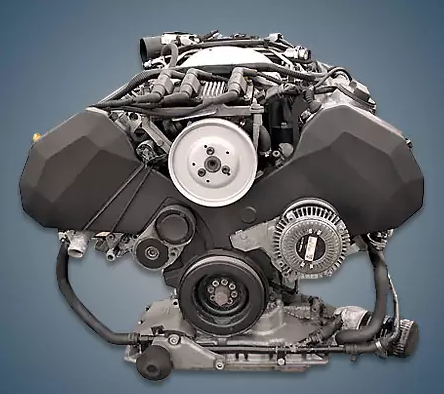
The EA835 series includes: ABC, AAH, ALF, BDV, ARE, ACK, ALG, BBJ, ASN.
Specifications
| Production years | 1997-2000 |
| Displacement, cc | 2393 |
| Fuel system | injector |
| Power output, hp | 165 |
| Torque output, Nm | 230 |
| Cylinder block | cast iron V6 |
| Block head | aluminum 30v |
| Cylinder bore, mm | 81 |
| Piston stroke, mm | 77.4 |
| Compression ratio | 10.5 |
| Features | 2 x DOHC |
| Hydraulic lifters | yes |
| Timing drive | chains & belt |
| Phase regulator | hydraulic chain tensioner |
| Turbocharging | no |
| Recommended engine oil | 5W-30 |
| Engine oil capacity, liter | 6.0 |
| Fuel type | petrol |
| Euro standards | EURO 3 |
| Fuel consumption, L/100 km (for Audi A6 1998) — city — highway — combined |
14.0 7.5 9.9 |
| Engine lifespan, km | ~330 000 |
The engine was installed on:
- Audi A4 B5 (8D) in 1997 – 2000;
- Audi A6 C5 (4B) in 1997 – 2000.
Disadvantages of the Audi ALF engine
Leaks are the primary issue for owners of these engines, despite their high level of dependability.
Oil and antifreeze leaks will greatly increase if the power unit is allowed to overheat.
Hydraulic lifters and chain tensioners quickly break down due to inadequate lubrication.
The electrician’s sensors, coils, and lambdas begin to fail frequently at high mileage.
The primary cause of floating engine speeds is contamination of the throttle or idle valve.