
The Audi AVG 1.9 TDI, a 1.9-liter diesel engine, was manufactured by the company between 1999 and 2001 and was fitted on a number of the company’s models, the most well-known of which were the A4 B5 and A6 C5. In essence, this power unit is a diesel engine with an AFN index that has been slightly upgraded.
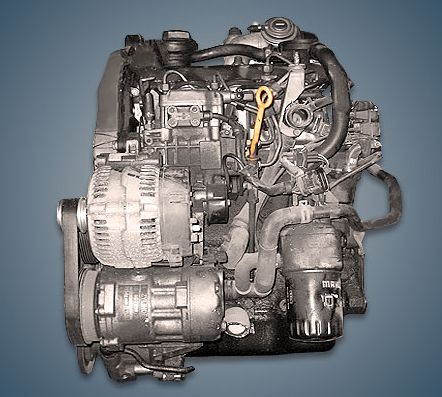
The EA180 series also includes: 1Z, AFN, AHF, AHU, ALH, AVG, AKU, AEY.
Specifications
| Production years | 1999-2001 |
| Displacement, cc | 1896 |
| Fuel system | direct injection |
| Power output, hp | 110 |
| Torque output, Nm | 235 |
| Cylinder block | cast iron R4 |
| Block head | aluminum 8v |
| Cylinder bore, mm | 79.5 |
| Piston stroke, mm | 95.5 |
| Compression ratio | 19.5 |
| Features | SOHC, intercooler |
| Hydraulic lifters | yes |
| Timing drive | belt |
| Phase regulator | no |
| Turbocharging | VGT |
| Recommended engine oil | 5W-40 |
| Engine oil capacity, liter | 4.3 |
| Fuel type | diesel |
| Euro standards | EURO 2 |
| Fuel consumption, L/100 km (for Audi A4 2000) — city — highway — combined |
6.9 4.3 5.2 |
| Engine lifespan, km | ~420 000 |
The engine was installed on:
- Audi A4 B5 (8D) in 1999 – 2000;
- Audi A6 C5 (4B) in 1999 – 2001;
- Volkswagen Passat B5 (3B) in 1999 – 2000;
- Volkswagen Sharan 1 (7M) in 1999 – 2000.
Disadvantages of the Audi AVG engine
The turbine’s wedge geometry and pollution are the main causes of thrust failures.
Unstable engine operation could also be caused by a clogged EGR valve.
Examine the lower flange of the crankcase ventilation tube carefully if the sump is completely submerged in oil.
Here, a plastic cooling tube is typically the source of the antifreeze leak.
Loss of compression and valve seat burnout are frequent at high mileage.