
From 2004 to 2008, the company assembled the 2.0-liter Audi BRE 2.0 TDI diesel engine, which was fitted to well-known models like the A4 in the rear of the B7 and the A6 in the rear of the C6. Contrary to popular belief, this motor’s injectors were electromagnetic rather than piezo.
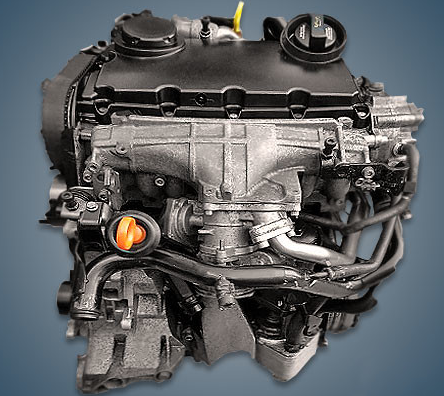
The EA188-2.0 series also includes: BKD, BKP, BMM, BMP, BMR, BPW, BRE, BRT.
Specifications
| Production years | 2004-2008 |
| Displacement, cc | 1968 |
| Fuel system | unit injectors |
| Power output, hp | 140 |
| Torque output, Nm | 320 |
| Cylinder block | cast iron R4 |
| Block head | aluminum 16v |
| Cylinder bore, mm | 81 |
| Piston stroke, mm | 95.5 |
| Compression ratio | 18.0 |
| Features | DOHC |
| Hydraulic lifters | yes |
| Timing drive | belt |
| Phase regulator | no |
| Turbocharging | VGT |
| Recommended engine oil | 5W-30 |
| Engine oil capacity, liter | 4.3 |
| Fuel type | diesel |
| Euro standards | EURO 4 |
| Fuel consumption, L/100 km (for Audi A4 2007) — city — highway — combined |
7.9 4.6 5.8 |
| Engine lifespan, km | ~275 000 |
| Weight, kg | 180 |
The engine was installed on:
- Audi A4 B7 (8E) in 2004 – 2005;
- Audi A6 C6 (4F) in 2004 – 2008.
Disadvantages of the Audi BRE engine
The most well-known issue with this diesel engine is the oil pump’s hexagon’s quick wear.
Although they are a good resource, electromagnetic unit injectors are very costly to replace.
Additionally, a lot of owners lament the 0.5 liters of oil used per thousand kilometers.
Engine thrust failures are typically caused by EGR contamination or the turbine geometry wedge.
A clogged particulate filter is frequently another cause of the motor’s erratic operation.