
Overview & Design Features
The Cadillac LM7 engine is a prominent member of General Motors’ highly successful Gen III Small Block V8 engine family, specifically known as the Vortec 5300. Introduced in the late 1990s, this 5.3-liter (5328 cc) naturally aspirated V8 quickly established itself as a workhorse, primarily powering full-size trucks and SUVs. Its design prioritized durability, reliability, and robust low-end torque, making it an ideal choice for vehicles requiring significant hauling and towing capabilities. The LM7’s widespread deployment cemented its reputation as one of the most prolific and dependable engines of its era, embodying the enduring legacy of the GM Small Block architecture.
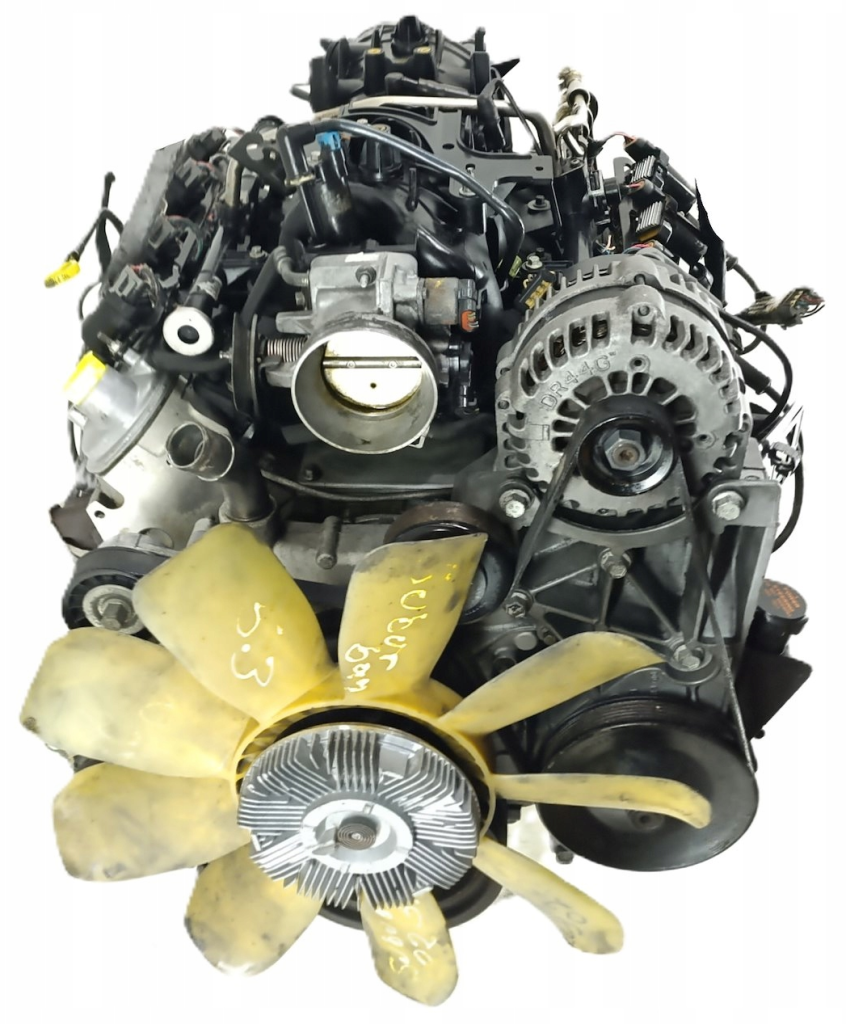
Engineered for longevity and performance within its vehicle segment, the LM7 features a sturdy cast iron block, known for its exceptional strength and heat dissipation properties. Complementing this robust foundation are aluminum cylinder heads, designed with “cathedral port” intake runners for efficient airflow. Fuel delivery is managed by Sequential Port Fuel Injection (SFI), providing precise fuel metering to each cylinder. The valvetrain utilizes an overhead valve (OHV), pushrod design with two valves per cylinder, a hallmark of the Small Block architecture, contributing to its compact size and inherent simplicity.
The LM7 engine saw extensive application across various GM models. It was widely deployed in the Chevrolet Silverado (1999-2007), Chevrolet Tahoe (2000-2006), Chevrolet Suburban (2000-2006), GMC Sierra (1999-2007), GMC Yukon (2000-2006), and Cadillac Escalade (1999-2006). These production years and models highlight its status as a core powertrain component for GM’s light truck and SUV lineup during its operational tenure, including various trims that benefited from its power and reliability.
Technical Specifications
| Displacement (cc) | 5328 |
| Max Power (hp (kW) @ RPM) | 270-295 hp (201-220 kW) @ 5200 RPM |
| Max Torque (Nm (kg*m) @ RPM) | 427-454 Nm (43.5-46.3 kg*m) @ 4000 RPM |
| Fuel Type | Gasoline (Regular unleaded, 87+ octane) |
| Fuel Consumption (l/100 km) | 14.0 – 16.5 (combined, varies significantly by vehicle application) |
| Engine Type | 90-degree V8, Naturally Aspirated |
| Compression Ratio | 9.5:1 |
| Cylinder Bore (mm) | 96.01 |
| Piston Stroke (mm) | 92.00 |
| Valvetrain | OHV (Overhead Valve), Pushrod |
| Valves per Cylinder | 2 |
| Additional Info | Gen III Small Block, Cast Iron Block, Aluminum Heads, Sequential Port Fuel Injection (SFI) |
Common Problems & Reliability
The LM7 engine is widely regarded for its exceptional reliability and longevity, often exceeding 250,000 miles (400,000 km) with proper maintenance. However, certain common issues may arise over its lifespan. A frequent concern is the failure of the oil pressure sender, an electrical component that can lead to an inaccurate oil pressure gauge reading or activate the low oil pressure warning. While not typically a catastrophic mechanical failure, it necessitates replacement for accurate monitoring.
Another characteristic often noted in higher-mileage LM7 engines is a condition referred to as “piston slap,” particularly during cold starts. This metallic knocking sound, caused by piston movement within the cylinder bore before thermal expansion, typically diminishes as the engine warms up. In most cases, it does not indicate imminent failure but should be monitored. Valve cover gasket leaks and rear main seal leaks are also common as the engine ages, leading to external oil seepage that requires gasket replacement.
Under proper care and consistent maintenance, an LM7 engine can realistically achieve an expected service life of 250,000 to 300,000 miles (400,000 to 480,000 km) or more before requiring a major overhaul. Instances of these engines surpassing 500,000 miles (800,000 km) are not uncommon, a testament to their robust engineering.
Maintenance Tips & Service Schedule
- Engine Oil: Utilize a high-quality 5W-30 synthetic blend or full synthetic motor oil. Oil and filter changes should be performed every 5,000-7,500 miles (8,000-12,000 km) or every 6 months, whichever occurs first, particularly under heavy use conditions like towing.
- Spark Plugs: Replace iridium or platinum spark plugs every 100,000 miles (160,000 km) to maintain optimal combustion efficiency and fuel economy.
- Timing Chain: The LM7 uses a robust timing chain designed for the life of the engine. There is no specified replacement interval. Inspection for excessive slack or wear is recommended at very high mileage (e.g., 200,000+ miles / 320,000+ km) if unusual noises are present.
- Coolant: Perform a coolant flush and refill with a manufacturer-approved extended-life coolant every 5 years or 100,000 miles (160,000 km).
- Air Filter: Inspect the air filter annually and replace it every 30,000 miles (48,000 km) or more frequently if operating in dusty environments.
- Fuel Filter: Refer to the specific vehicle’s owner’s manual. Many applications feature a non-serviceable in-tank fuel filter, while others may require replacement every 50,000 miles (80,000 km).
Conclusion
The Cadillac LM7 engine stands out as a highly reliable and durable powerplant, a direct result of its well-engineered Gen III Small Block architecture. Its consistent performance, robust construction, and proven longevity make it a very safe and reliable choice for a used vehicle buyer. With a history of powering millions of GM trucks and SUVs, the LM7 has demonstrated its capability to withstand significant mileage and demanding operational conditions. Provided a used vehicle equipped with an LM7 has a documented history of proper maintenance, it represents a strong investment, capable of providing many more years of dependable service.