
From 1997 to 2010, the Chrysler EER 2.7-liter V6 petrol engine was manufactured in the United States and fitted to the company’s most well-known models, including the Concorde, Sebring, Magnum 300C, and 300M. This unit came in multiple varieties under different indices, such as EES, EEE, and EE0.
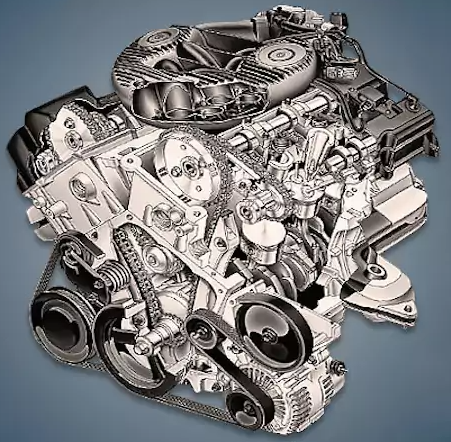
Internal combustion engines EGW, EGE, EGG, EGF, EGN, EGS, and EGQ are also part of the LH series.
Good maintainability is one of the benefits of the EER engine; stocks are easily found and reasonably priced. Drivers enjoy the engine’s responsiveness, good power, and low maintenance costs. In comparison to similar vehicles, drivers value the engine’s dependability, particularly the great ride on the track.
The engine was installed on:
- Chrysler 300M 1 (LR) in 1998 – 2004;
- Chrysler 300C 1 (LX) in 2004 – 2010;
- Chrysler Concorde 2 in 1997 – 2004;
- Chrysler Intrepid 2 in 1997 – 2004;
- Chrysler Sebring 2 (JR) in 2000 – 2006;
- Chrysler Sebring 3 (JS) in 2006 – 2010;
- Dodge Avenger 1 (JS) in 2007 – 2010;
- Dodge Charger 1 (LX) in 2006 – 2010;
- Dodge Intrepid 2 (LH) in 1997 – 2004;
- Dodge Journey 1 (JC) in 2008 – 2010;
- Dodge Magnum 1 (LE) in 2004 – 2008;
- Dodge Stratus 2 (JR) in 2000 – 2006.
Specifications
| Production years | 1997-2010 |
| Displacement, cc | 2736 |
| Fuel system | injector |
| Power output, hp | 190 – 205 |
| Torque output, Nm | 255 – 265 |
| Cylinder block | aluminum V6 |
| Block head | aluminum 24v |
| Cylinder bore, mm | 86 |
| Piston stroke, mm | 78.5 |
| Compression ratio | 9.7 – 9.9 |
| Features | DOHC |
| Hydraulic lifters | yes |
| Timing drive | chain |
| Phase regulator | no |
| Turbocharging | no |
| Recommended engine oil | 5W-30 |
| Engine oil capacity, liter | 5.4 |
| Fuel type | petrol |
| Euro standards | EURO 3/4 |
| Fuel consumption, L/100 km (for Chrysler 300M 2000) — city — highway — combined |
15.8 8.9 11.5 |
| Engine lifespan, km | ~330 000 |
Disadvantages of the EER engine
The most well-known issue here is antifreeze leaks from beneath the pump gasket; the internal combustion engine frequently overheats and slags quickly because of inadequate cooling;
Engine seizing and inadequate lubrication are caused by clogged oil passageways;
Additionally, this motor has soot, particularly in the throttle and EGR system;
Additionally, the ignition system and sensors are unreliable electrical systems.