
The Cummins B series’ 4BT engine is an in-line, four-cylinder, water-cooled turbodiesel engine. The engine’s cylinder block is made of cast iron and has holes drilled right into it. The engine’s OHV valve mechanism. The crankshaft drives the camshaft, which is housed in a block, via gears at the engine’s front (as well as the oil pump).
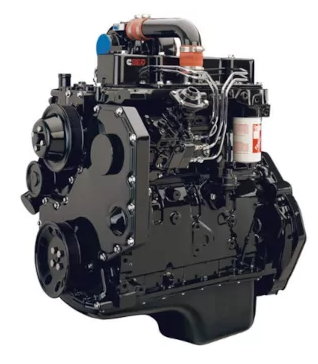
The camshaft pushes the rocker arms with tappets and solid tappets as it opens and closes the valves. Cast iron is also used to make the cylinder head. The pipes for the inlet and outlet are located on opposing sides (cross flow cylinder head). Each cylinder has two of the eight valves. A mechanical direct injection system is installed in 4BT. Early models had a camshaft gear-driven mechanical P7100 injection pump.
The 4BT engine lacks intercooling but has a turbocharger. With a lower compression ratio of 16.5:1, the intercooled version is known as 4BTA, where the letter A stands for “aftercooling.” Higher boost is produced by cold air and low compression. Remember that the 4BTA is an industrial engine, but it offers more power and torque and is better suited for installation in a small truck or pickup. Depending on the model and year, air-cooled automobile engines have different numbers. There is also a naturally aspirated industrial version known as 4B, which has an 18.5:1 compression ratio.
The 4BT produces a lot of vibration and is not as smooth as its 6-cylinder sibling because it is intrinsically less balanced. A common option for many commercial cargo vans, the 3.9-liter Cummins engine is utilized in industrial machinery like wood chippers, drilling machines, large water pumps, and powertrains.
Specifications
| Manufacturer | Cummins |
| Production years | 1984-1998 |
| Cylinder block alloy | cast iron |
| Cylinder head material | cast iron |
| Fuel type | diesel |
| Fuel system | Direct injection, mechanical injection pump |
| Configuration | inline |
| Number of cylinders | 4 |
| Valves per cylinder | 2 |
| Valve train layout | OHV |
| Cylinder bore, mm | 102 |
| Piston stroke, mm | 119 |
| Displacement | 3.9 liters |
| Configuration | Four-stroke, turbocharged |
| Compression ratio | 17,5:1 (4BT) 16.5:1 (4BTA) 18.5:1 (4B) |
| Displacement | 80-130 hp at 2300-2600 rpm |
| Torque output | 330-530 Nm at 1600-1700 rpm |
| Weight (dry) | 388 kg |
| Firing order | 1-3-4-2 |
| Oil volume | 9,5 л (with filter) |
| Oil change interval | 10000 km or 6 months |
| Installed | industrial equipment, commercial vehicles (vans, trucks), ships and boats |
Frequent problems and reliability 4BT Cummins
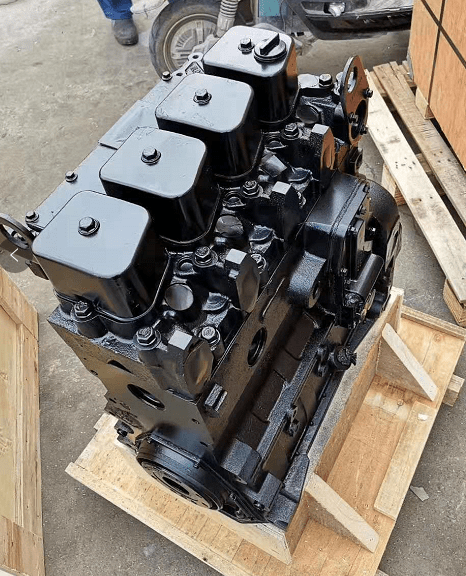
B Series motors are inexpensive, simple to rebuild or repair, and require very little electronics. Compared to more recent diesels with VP electric pumps, P-pump diesels are more dependable and simpler to modify. However, the 4BT is actually a massive, outdated diesel engine. It smokes like old diesel and is noisy and shaky. The 4BT’s large dimensions—it is tall, heavy, and requires room for pipes and an intercooler—make it challenging to install under the hood of a small car. Its weight puts more strain on the front suspension and impairs the handling of a small 4-wheel drive vehicle, but this power is insufficient for a full-size truck or SUV.