
For the B-Series trucks, the most well-known engine is the Cummins 6BT. The first diesel engine to replace the massive V8 gasoline engines in full-size pickup trucks was the Cummins 5.9 L engine. 1984 saw the start of production. It was created to power Case agricultural equipment. However, the 6BT was later widely utilized in buses and trucks that were light, medium, and some heavy.
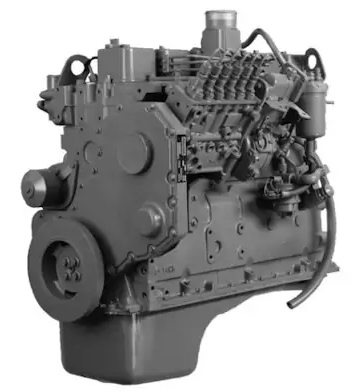
Due to its exceptional torque at low revs and throughout the engine speed range, as well as its superior fuel efficiency over the Dodge V8 gasoline engines, the turbocharged 12-valve Cummins engine gained enormous popularity in the 1989–1998 Dodge Ram pickups.
The Cummins 6BT is a 5.9-liter, in-line, six-cylinder turbocharged diesel engine. The engine’s cylinder head and cylinder block are made of cast iron. Solid pushers and a 12-valve OHV system (two valves per cylinder) make up the valve mechanism. As a result, the engine is frequently called a 12-valve Cummins. A timing kit (without belts and chains) is located in front of the engine. Gears also power the fuel and oil pumps. The engine has fuel injectors and a dependable mechanical injection pump that is simple to adjust. Although some early models had a CAV rotary injection pump, the engines were fitted with a Bosch VE44 rotary injection pump until 1994. Bosch P7100 injection pumps are standard on engines manufactured after 1994. Since 1991, all 5.9L engines have had an air-to-air intercooler in addition to a turbocharger. The Holset H1C (1989–1993), WH1 (1994), and HX35 (1994–1998) turbochargers were all made by Holset. In place of the conventional glow plug system, a grill heater is installed in the intake manifold to facilitate engine starting in cold weather.
The engine was available with transmissions from the manufacturer, including the GETRAG G360 (5-speed manual), New Venture NV4500 (5-speed manual), and Chrysler 47RH (4-speed automatic). A new 24-valve common rail high-pressure Bosch 5.9L ISB Cummins engine took the place of the 12-valve engine, which was manufactured until 1998.
Specifications
| Manufacturer | Cummins |
| Production years | 1989-1998 |
| Cylinder block alloy | cast iron |
| Cylinder head material | cast iron |
| Fuel type | diesel |
| Fuel system | Direct injection, mechanical injection pump |
| Configuration | inline |
| Number of cylinders | 6 |
| Valves per cylinder | 2 |
| Valve train layout | OHV |
| Cylinder bore, mm | 102 |
| Piston stroke, mm | 119 |
| Displacement | 5.9 liters |
| Configuration | Four-stroke, turbocharged |
| Compression ratio | 17.0:1 |
| Displacement | 160-215 hp at 2500 rpm |
| Torque output | 542-597 Nm at 1600 rpm |
| Weight (dry) | 499 kg |
| Firing order | 1-5-3-6-2-4 |
| Oil volume | 11,4 liter (with filter) |
| Oil change interval | 10000 km or 6 months |
| Installed | Dodge Ram pickups, buses, sea vessels, agricultural machinery, construction machinery |
Frequent problems and reliability 6BT Cummins
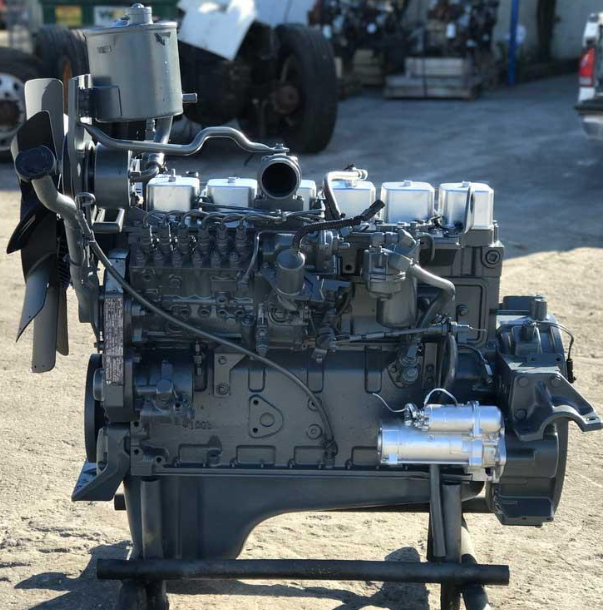
The foundation for flawless dependability and durability is the cast iron cylinder block and head. There aren’t many electronics and nothing particularly noteworthy. The 6BT is a basic diesel engine with injectors and a mechanical pump. Because of this, fuel quality is not difficult to achieve. Additionally, Cummins 12-valve engines are well known for starting quickly in any kind of weather.
However, the engine has shortcomings. A clogged heater grid is one of them. It is positioned in between the intake manifold and the air pipe. Soot accumulates on the heating element over time, limiting airflow to the intake manifold. In this instance, the engine takes a little longer to start than normal and occasionally runs out of fuel while idle or at low revs. The Killer Pin, or KDP, is another issue with a 12-valve engine. A steel locating pin is inserted into the engine’s block next to the bolt that connects the fuel pump and timing gears. This pin is pushed back a little by the motor’s vibration. Serious engine damage could result from the pin falling between the timing gears, mixing valves, and brake pistons. However, there are some extremely affordable ways to avoid such a dramatic engine crash.