
From 2007 to 2010, models like the Bravo, Linea, Grande Punto, Lancia Delta, and Alfa Romeo MiTo were equipped with the 1.4-liter turbo Fiat 198A1000, also known as the 1.4 T-Jet. The MultiAir unit swiftly replaced this motor, in contrast to its less potent counterpart.
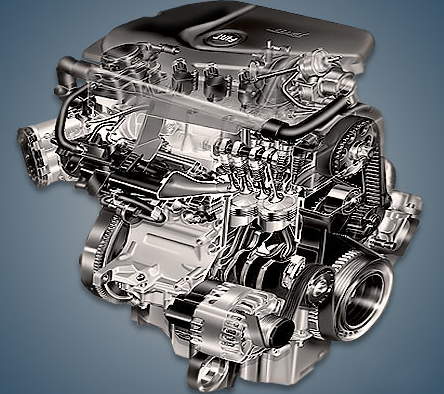
187A1000, 169A4000, 176A8000, 188A4000, 188A5000, 199A6000, 350A1000, 198A1000, 198A4000, 955A6000, and 955A2000 are fire engines.
Specifications
| Production years | 2007-2010 |
| Displacement, cc | 1368 |
| Fuel system | distributed injection |
| Power output, hp | 150 – 155 |
| Torque output, Nm | 230 |
| Cylinder block | cast iron R4 |
| Block head | aluminum 16v |
| Cylinder bore, mm | 72 |
| Piston stroke, mm | 84 |
| Compression ratio | 9.8 |
| Features | DOHC, intercooler |
| Hydraulic lifters | yes |
| Timing drive | belt |
| Phase regulator | no |
| Turbocharging | IHI RHF3 VL36 |
| Recommended engine oil | 5W-40 |
| Engine oil capacity, liter | 2.9 |
| Fuel type | petrol |
| Euro standards | EURO 4 |
| Fuel consumption, L/100 km (for Fiat Bravo 2009) — city — highway — combined |
8.5 5.3 6.5 |
| Engine lifespan, km | ~230 000 |
| Weight, kg | 125 |
The engine was installed on:
- Alfa Romeo MiTo I (Type 955) in 2008 – 2010;
- Fiat Bravo II (198) in 2007 – 2010;
- Fiat Grande Punto I (199) in 2008 – 2010;
- Fiat Linea I (323) in 2008 – 2010;
- Lancia Delta III (844) in 2008 – 2010.
Disadvantages of the Fiat 198A1000 engine
This engine is incredibly dependable for a low-volume turbo engine, but it worries about little things.
A fuel pressure regulator or a clogged filter are typically the cause of poor starting.
Examine the oil separator, particularly the diaphragm, if lubricant consumption occurs.
The exhaust manifold and the hot portion of the turbine frequently crack at high mileage.
Additionally, this is where the turbocharger bypass valve’s rubber diaphragm bursts.