
Overview & Design Features
The GMC Duramax LM2 engine represents a significant advancement in light-duty diesel powertrain technology, meticulously engineered by General Motors. Introduced in late 2019 for the 2020 model year, this 3.0-liter (2993 cc) inline-six turbocharged diesel engine was developed to offer a compelling blend of fuel efficiency, robust torque, and smooth operation in full-size trucks and SUVs. Its design marked GM’s return to the inline-six diesel configuration for light-duty applications in North America, filling a critical market niche and standing as a testament to modern diesel engineering.
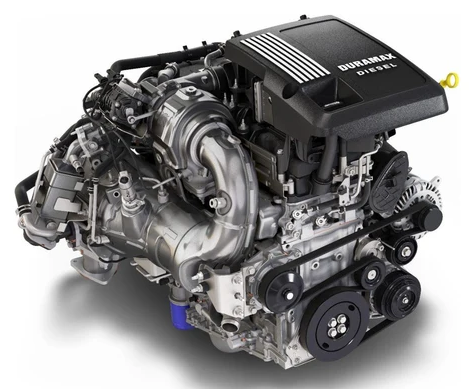
At its core, the LM2 Duramax features an advanced lightweight architecture, utilizing an aluminum cylinder block with cast-in iron liners and an aluminum cylinder head. This construction minimizes weight while maintaining structural integrity. Fuel delivery is managed by a sophisticated high-pressure common-rail direct injection system operating at up to 2,500 bar (36,250 psi), ensuring precise fuel atomization and efficient combustion. The valvetrain incorporates dual overhead camshafts (DOHC) with four valves per cylinder, optimizing airflow for both intake and exhaust. A variable geometry turbocharger (VGT) is integrated to provide rapid boost response across the RPM range, complemented by an active thermal management system and advanced exhaust gas recirculation (EGR) for emissions control.
The Duramax LM2 engine made its debut in a range of General Motors’ most popular light-duty vehicles. It was officially deployed in the 2020 and subsequent model years of the Chevrolet Silverado 1500 and GMC Sierra 1500 trucks. Beyond pickups, the LM2 also powered the Chevrolet Tahoe, Chevrolet Suburban, GMC Yukon, and Cadillac Escalade, offering a powerful yet efficient diesel option for full-size SUVs. Specific trims typically included higher-end configurations where customers sought premium performance and fuel economy.
Technical Specifications
| Specification | Value |
|---|---|
| Displacement (cc) | 2993 |
| Max Power (hp (kW) @ RPM) | 277 (207) @ 3750 |
| Max Torque (Nm (kg*m) @ RPM) | 624 (63.6) @ 1500 |
| Fuel Type | Diesel |
| Fuel Consumption (l/100 km) | Approx. 9.0 – 10.5 (Combined EPA) |
| Engine Type | Turbocharged Inline 6-cylinder Diesel |
| Compression Ratio | 15.0:1 |
| Cylinder Bore (mm) | 84 |
| Piston Stroke (mm) | 90 |
| Valvetrain | DOHC (Dual Overhead Camshaft) |
| Valves per Cylinder | 4 |
| Additional Info | Variable Geometry Turbocharger, Active Thermal Management, High-Pressure Common Rail Direct Injection, Aluminum Block & Head |
Common Problems & Reliability
The Duramax LM2 engine has generally demonstrated strong reliability since its introduction. However, like any complex modern diesel, certain areas warrant attention. Early production models occasionally experienced issues related to the Diesel Exhaust Fluid (DEF) system, specifically with sensor readings or heater element malfunctions, which could trigger warning lights and limp-mode operation. These issues were often addressed through software updates or component replacements under warranty.
Another area of minor concern for some owners has been the potential for small oil leaks, particularly around the vacuum pump seal located at the rear of the engine. While not catastrophic, these can lead to minor oil consumption or visible seepage over time. Furthermore, due to the intricate emissions control systems, infrequent highway driving or short trips can lead to accelerated Diesel Particulate Filter (DPF) loading, requiring more frequent regeneration cycles or potential DPF cleaning/replacement if not properly maintained or driven. With diligent maintenance and regular operation that allows for proper DPF regeneration, the LM2 engine is engineered for a substantial service life, realistically expected to achieve between 250,000 and 300,000 miles (approximately 400,000 to 480,000 km) before requiring a major overhaul.
Maintenance Tips & Service Schedule
Optimal longevity and performance of the Duramax LM2 engine depend heavily on adherence to a strict maintenance regimen. Engine oil and filter changes are paramount: the manufacturer recommends using a Dexos D approved 0W-20 or 5W-30 full synthetic diesel engine oil, typically every 7,500 to 10,000 miles (12,000 to 16,000 km) or annually, whichever comes first, based on the vehicle’s oil life monitoring system.
Fuel filter replacement is critical for diesel engines to protect the high-pressure fuel system from contaminants. This component should be replaced every 22,500 miles (approximately 36,000 km). The engine utilizes a robust timing chain system designed for the life of the engine, negating the need for scheduled timing belt replacements. Air filter inspection should occur annually, with replacement as needed based on operating conditions. Coolant flushes are typically recommended every 5 years or 150,000 miles (240,000 km). Regular monitoring and refilling of Diesel Exhaust Fluid (DEF) are also essential for emissions compliance and engine operation. Additionally, ensuring the vehicle is driven regularly at highway speeds allows the DPF to complete its regeneration cycles, which is crucial for preventing DPF buildup and associated issues.
Conclusion
The GMC Duramax LM2 engine stands as a highly competent and generally reliable powertrain choice. Its advanced engineering delivers impressive fuel economy and strong torque, making it an excellent option for light-duty truck and SUV applications. For a used vehicle buyer, the LM2 is considered a safe and reliable choice, provided that a verifiable history of consistent and proper maintenance is available. Due diligence regarding DEF system health and evidence of regular DPF regeneration, especially on higher mileage examples, will help ensure a positive ownership experience. With appropriate care, this engine is well-positioned to provide many years and miles of dependable service.