
From 2012 to 2020, the 1.0-liter 3-cylinder Hyundai G3LB or 1.0 TCI engine was manufactured and used in small cars like the Ray or the Morning, which is the Korean equivalent of the Picanto. Distributed injection and turbocharging, which are uncommon for this series, set the unit apart.
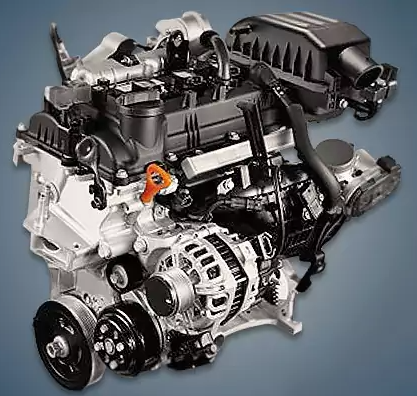
G3LA, G3LB, G3LC, G3LD, G3LE, and G3LF make up the Kappa R3 family.
The engine was mounted on:
- Kia Picanto 2 (TA) in 2015 – 2017; Picanto 3 (JA) in 2017 – 2020;
- Kia Ray 1 (TAM) in 2012 – 2017.
Specifications
| Production years | 2012-2020 |
| Displacement, cc | 998 |
| Fuel system | distributed injection |
| Power output, hp | 106 |
| Torque output, Nm | 137 |
| Cylinder block | aluminum R3 |
| Block head | aluminum 12v |
| Cylinder bore, mm | 71 |
| Piston stroke, mm | 84 |
| Compression ratio | 9.5 |
| Features | DOHC |
| Hydraulic lifters | yes |
| Timing drive | chain |
| Phase regulator | CVVT |
| Turbocharging | yes |
| Recommended engine oil | 5W-30 |
| Engine oil capacity, liter | 3.8 |
| Fuel type | petrol |
| Euro standards | EURO 5 |
| Fuel consumption, L/100 km (for Kia Ray 2015) — city — highway — combined |
5.7 3.5 4.6 |
| Engine lifespan, km | ~230 000 |
| Weight, kg | 74.2 (without attachments) |
Disadvantages of the Kia G3LB engine
For the Korean market, this turbo unit is uncommon, and little is known about its malfunctions;
They primarily complain about loud work and strong vibrations on specialized forums;
Maintain the radiators’ cleanliness to prevent leaks and overheating of the seals;
The timing chain frequently stretches after 100–150 thousand kilometers and needs to be replaced;
The adsorber valve and engine mounts are the motors’ weak points.