
From 1998 to 2004, the Japanese company assembled the 3.0-liter Isuzu 4JX1 diesel engine and fitted it to numerous models, including the Wizard, Trooper, and comparable Opel Monterey. Compared to its OHV predecessors, this 16-valve DOHC engine was essentially different.
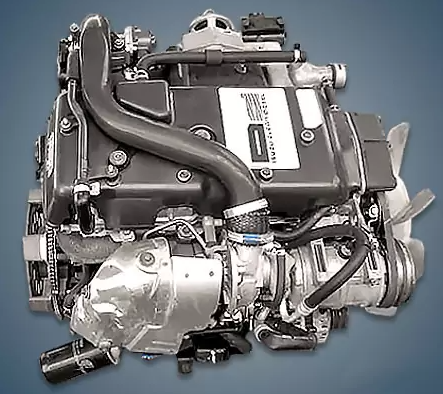
Diesels 4JB1, 4JX1, 4JG2, 4JJ1, and 4JJ3 are also part of the J-engine line.
Specifications
| Production years | 1998-2004 |
| Displacement, cc | 2999 |
| Fuel system | HEUI |
| Power output, hp | 145 – 160 |
| Torque output, Nm | 295 – 335 |
| Cylinder block | cast iron R4 |
| Block head | aluminum 16v |
| Cylinder bore, mm | 95.4 |
| Piston stroke, mm | 104.9 |
| Compression ratio | 19.0 |
| Features | DOHC, intercooler |
| Hydraulic lifters | no |
| Timing drive | belt |
| Phase regulator | no |
| Turbocharging | IHI RHF5 |
| Recommended engine oil | 5W-30 |
| Engine oil capacity, liter | 7.5 |
| Fuel type | diesel |
| Euro standards | EURO 2/3 |
| Fuel consumption, L/100 km (for Isuzu Trooper 2000) — city — highway — combined |
13.6 8.7 10.1 |
| Engine lifespan, km | ~300 000 |
| Weight, kg | 280 |
The engine was installed on:
- Isuzu MU 2 (UE) in 1998 – 2004;
- Isuzu Rodeo 2 (UE) in 1998 – 2002;
- Isuzu Trooper 2 (UB2) in 1998 – 2002;
- Isuzu Wizard 2 (UE) in 1998 – 2004;
- Opel Monterey A (M92) in 1998 – 1999;
- Honda Horizon 1 in 1998 – 1999.
Disadvantages of the Isuzu 4JX1 engine
One of the most troublesome Isuzu diesels is this one.
The majority of its malfunctions are caused by the peculiarities of the HEUI fuel system.
Particularly, there are a lot of complaints regarding diesel fuel seeping into the oil through nozzle seals.
Keep an eye on the timing belt’s condition; if it breaks quickly, the valves will bend.
There are no hydraulic lifters here, and the valve clearances must be adjusted on a regular basis.