
The popular MU-X SUV, D-Max pickup truck, or comparable Mazda BT-50 are equipped with the 3.0-liter Isuzu 4JJ3 diesel engine, which has been assembled at a plant in Japan since 2019. In essence, this power unit is a significantly improved 4JJ1 engine.
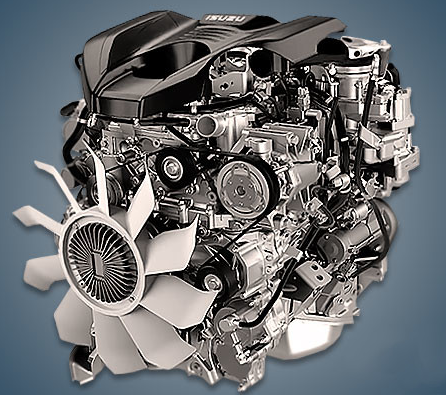
Diesels 4JB1, 4JX1, 4JG2, 4JJ1, and 4JJ3 are also part of the J-engine line.
Specifications
| Production years | since 2019 |
| Displacement, cc | 2999 |
| Fuel system | Common Rail |
| Power output, hp | 190 |
| Torque output, Nm | 450 |
| Cylinder block | cast iron R4 |
| Block head | aluminum 16v |
| Cylinder bore, mm | 95.4 |
| Piston stroke, mm | 104.9 |
| Compression ratio | 16.3 |
| Features | DOHC |
| Hydraulic lifters | no |
| Timing drive | chain and gears |
| Phase regulator | no |
| Turbocharging | IHI RHS4 |
| Recommended engine oil | 5W-30 |
| Engine oil capacity, liter | 7.0 |
| Fuel type | diesel |
| Euro standards | EURO 5 |
| Fuel consumption, L/100 km (for Isuzu D-Max 2021) — city — highway — combined |
10.3 6.8 8.1 |
| Engine lifespan, km | ~500 000 |
| Weight, kg | 320 |
The engine was installed on:
- Isuzu D-Max 3 (RG) since 2019;
- Isuzu MU-X 2 (RJ) since 2020;
- Mazda BT-50 III (TF) since 2020.
Disadvantages of the Isuzu 4JJ3 engine
He frequently complains only about vibration loading and receives little reprimand on specialized forums.
It turned out that the Denso fuel system had high requirements for diesel fuel quality.
Contamination of the EGR valve and particulate filter causes a lot of problems as usual.
This place lacks hydraulic lifters, and the valve clearance needs to be adjusted on a regular basis.