
Overview & Design Features
The IVECO FPT NEF N67 570 EVO Diesel Marine engine represents a pinnacle of FPT Industrial’s engineering in the marine sector. As part of the globally recognized NEF (New Engine Family) series, this powerplant is an inline six-cylinder, 6.7-liter (6728 cc) turbocharged and intercooled diesel engine. It is specifically designed for high-performance and demanding professional and recreational marine applications, inheriting a legacy of reliability and robust construction from IVECO’s extensive experience in industrial and commercial vehicle powertrains. The “EVO” designation signifies an evolved iteration, incorporating advancements in power delivery, efficiency, and emissions compliance for contemporary marine standards.
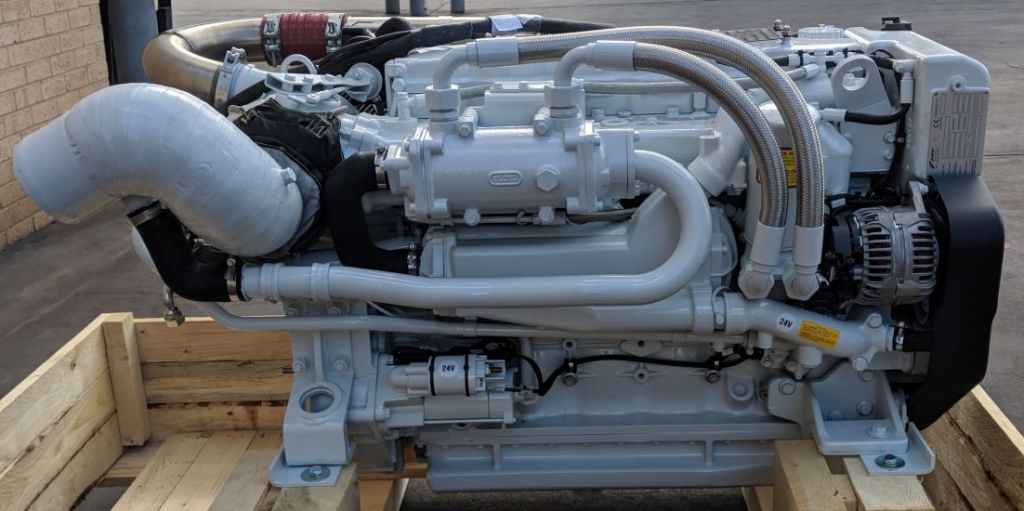
At its core, the N67 570 EVO features a heavily fortified cast iron cylinder block and a durable cast iron cylinder head, engineered to withstand the extreme pressures and temperatures inherent in high-output marine diesel operation. Fuel delivery is managed by a sophisticated Common Rail Direct Injection (CRDI) system, which precisely controls fuel atomization and injection timing for optimal combustion efficiency, reduced emissions, and enhanced throttle response. The valvetrain typically employs a Single Overhead Camshaft (SOHC) design, actuating four valves per cylinder, promoting efficient gas flow and volumetric efficiency. Forced induction is provided by a wastegate-controlled turbocharger, complemented by an intercooler to reduce intake air temperature, thereby increasing air density and maximizing power output.
The IVECO FPT NEF N67 570 EVO Diesel Marine engine is predominantly found in a diverse range of marine vessels where high power-to-weight ratio and reliability are paramount. These applications include high-performance yachts, sportfishing boats, fast patrol boats, commercial workboats, and light displacement power catamarans. Its production timeline and specific deployment are centered on the modern marine market segment requiring engines compliant with international emission standards such as IMO MARPOL Tier 2, EPA Tier 3, and EU RCD Stage II, making it a current and relevant choice for new builds and repowering projects from the mid-2010s to the present day.
Technical Specifications
| Specification | Value |
|---|---|
| Displacement | 6728 cc (6.7 L) |
| Max Power | 570 hp (419 kW) @ 3000 RPM |
| Max Torque | 1650 Nm (168 kg*m) @ 1800-2400 RPM |
| Fuel Type | Diesel |
| Fuel Consumption (l/100 km) | Refer to manufacturer’s technical documentation (not applicable for marine engines, consumption typically in L/hr or g/kWh) |
| Engine Type | Inline 6-cylinder, Turbocharged, Intercooled Diesel |
| Compression Ratio | 16.5:1 |
| Cylinder Bore | 104 mm |
| Piston Stroke | 132 mm |
| Valvetrain | SOHC |
| Valves per Cylinder | 4 |
| Additional Info | Common Rail Direct Injection, Wastegate Turbocharger, IMO MARPOL Tier 2, EPA Tier 3, EU RCD Stage II compliant |
Common Problems & Reliability
The FPT NEF N67 570 EVO Diesel Marine engine is generally regarded for its robustness in demanding marine environments. However, certain areas warrant attention. Like many modern common rail diesels operating under high load, injector issues can occasionally arise, manifesting as rough running, increased smoke, or decreased fuel efficiency. This can often be attributed to fuel quality or extended periods of low-RPM operation leading to carbon buildup. Another potential concern involves the turbocharger system; while durable, consistent high-boost operation or inadequate cool-down procedures can accelerate wear on bearings and seals. Lastly, issues related to the engine’s extensive array of sensors and electronic control unit (ECU) components, though rare, can lead to diagnostic challenges and fault codes, impacting performance.
Under a regimen of diligent maintenance, appropriate operational practices, and use of quality fuels, the NEF N67 570 EVO engine exhibits an impressive service life. A major overhaul is typically not required until the engine has accumulated between 10,000 and 15,000 operating hours. This longevity is contingent upon adherence to manufacturer-specified service intervals and proactive monitoring of engine health parameters.
Maintenance Tips & Service Schedule
Optimal performance and longevity of the IVECO FPT NEF N67 570 EVO Diesel Marine engine are critically dependent on strict adherence to a comprehensive maintenance schedule. Engine oil and oil filter changes are paramount and should be performed every 250 operating hours or annually, whichever comes first, utilizing a high-quality, marine-grade diesel engine oil with a viscosity typically in the range of 15W-40, compliant with API CI-4/CJ-4 or ACEA E7/E9 specifications. Fuel filters (primary and secondary) are crucial for protecting the common rail system and should be replaced every 250-500 hours, depending on fuel quality and manufacturer recommendations.
Coolant system maintenance is also vital; the coolant should be checked regularly for proper levels and condition, with a full flush and replacement of marine-grade extended-life coolant recommended every 1000-1500 hours or every 2-3 years. The air filter should be inspected frequently and replaced as needed, typically every 500 hours. The timing gear system, being gear-driven on this engine family, does not require belt replacement, but periodic inspections of the gear train and associated components (e.g., idlers, tensioners) should be part of the 1000-hour service. Seawater pump impellers are wear items and should be inspected annually or every 250 hours, with replacement every 250-500 hours as a preventative measure. Regular checks of anodes (zincs) in heat exchangers and cooling systems are also essential to prevent corrosion.
Conclusion
The IVECO FPT NEF N67 570 EVO Diesel Marine engine stands as a highly capable and generally reliable choice for marine propulsion. Its robust construction, modern common rail injection, and significant power output make it well-suited for demanding applications. For a prospective buyer of a used vessel equipped with this engine, it represents a sound investment, provided its service history is comprehensive and indicates consistent, high-quality maintenance. Key considerations should include a thorough inspection by a qualified marine mechanic, a check of injector health, turbocharger condition, and a review of the engine’s operating hours relative to its recommended overhaul schedule. With proper care and adherence to manufacturer guidelines, this engine offers a long and dependable operational life.